
Month: May 2026

  • Memorial Day, Community, and the Importance of Inclusion

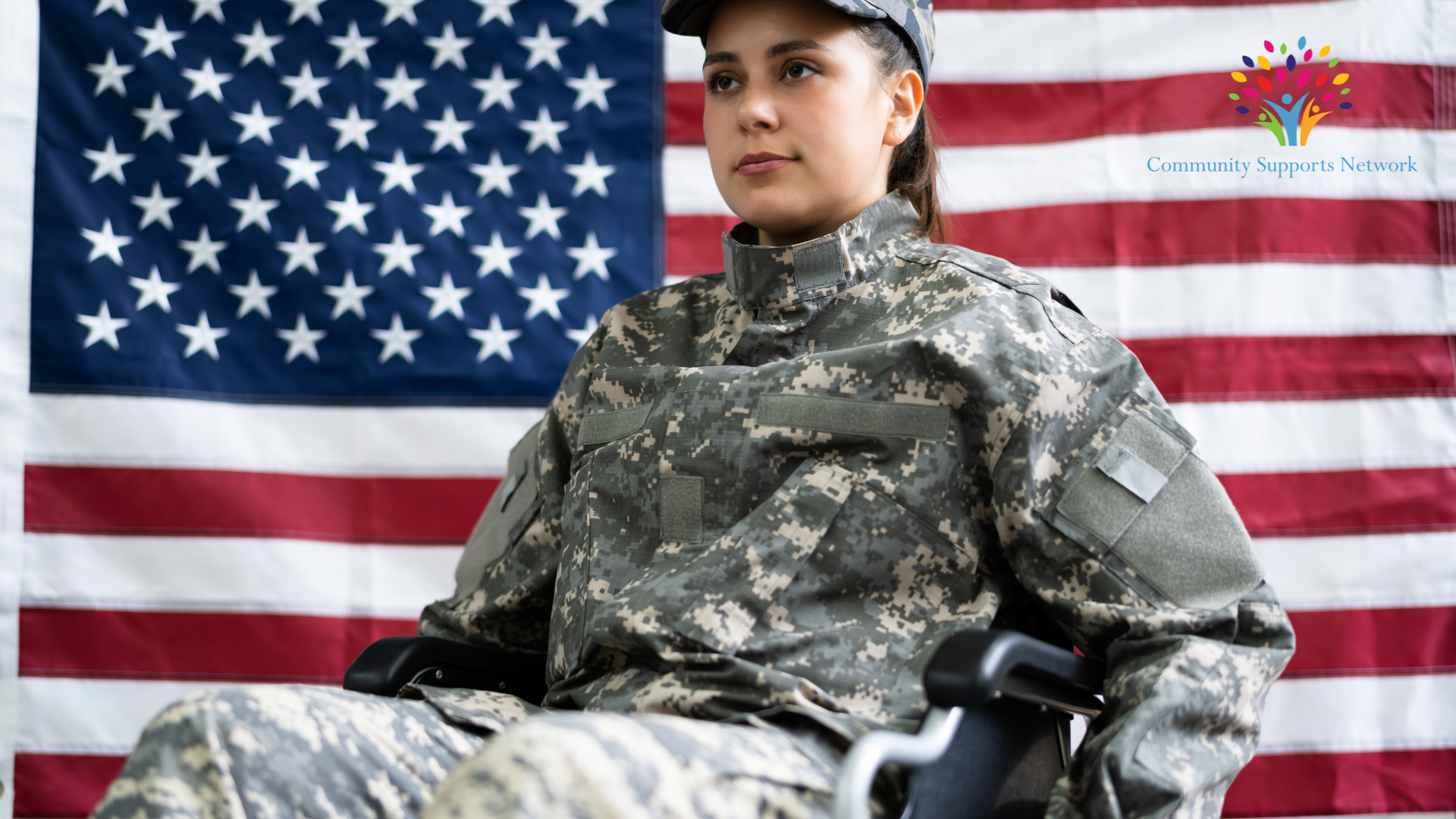
    Photo of an American soldier with a disability.  She is an example of a person whose service and sacrifice for our nation is what we honor on May 25, 2026 and which is the topic of this blog post about Memorial Day, community and the importance of inclusion.

    Each Memorial Day, we pause to honor and remember the brave men and women who made the ultimate sacrifice while serving our country. It is a time of reflection, gratitude, and remembrance for the individuals and families whose lives have been forever impacted by service and sacrifice.

    As communities gather this holiday weekend with family, friends, and loved ones, it also serves as an important reminder of the values that connect us — compassion, service, dignity, and community.

    At Community Supports Network, we believe those values should extend to everyone, including individuals with disabilities who deserve the opportunity to live meaningful, inclusive, and self-directed lives within their communities.

    For many individuals with disabilities, community inclusion is not simply about participation — it’s about belonging. It’s about having opportunities to connect with others, enjoy shared experiences, access support systems, and feel valued as part of the larger community.

    Barriers and How To Counter Them

    Holidays and community gatherings can sometimes highlight the barriers individuals with disabilities still face, including:

    • Social isolation
    • Accessibility challenges
    • Transportation limitations
    • Lack of inclusive programming
    • Difficulty accessing community spaces and events

    That is why community-based supports matter so deeply.

    Through advocacy, inclusive programming, supported employment, relationship-building, and person-centered services, we work to help ensure individuals with disabilities have opportunities to actively participate in the communities around them — not as spectators, but as valued members of society.

    Recognizing Veterans With Disabilities

    This Memorial Day, we also recognize veterans living with disabilities, individuals navigating both physical and invisible challenges, and the families and caregivers who provide support every day. Their experiences are an important part of the broader conversation around accessibility, inclusion, and support services.

    At its core, inclusion means creating communities where everyone has the opportunity to feel safe, respected, connected, and empowered.

    As we head into the holiday weekend, we encourage our community to:

    • Check in on one another
    • Create welcoming and inclusive spaces
    • Practice empathy and understanding
    • Support individuals and families who may feel isolated
    • Remember that belonging matters
    • Donate to a charity that supports disabled veterans like https://www.woundedwarriorproject.org

    While Memorial Day is rooted in remembrance, it is also an opportunity to reflect on the kind of communities we want to continue building together — communities grounded in compassion, support, dignity, and inclusion for all.

    From all of us at Community Supports Network, we wish everyone a safe, meaningful, and reflective Memorial Day weekend.

  • NJ DDD Annual Resource Fair – June 2026

    Come Join Us There on June 23, 2026!

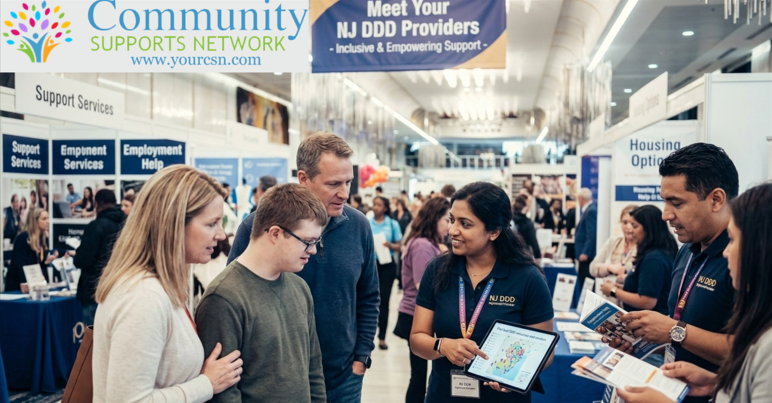
    Image of a disabled adult with his direct support professional, surrounded by our company logo at top left and with the words "Annual Resource Fair" in large font at the bottom.  Those words describe the expo event taking place on June 23, 2026 for NJ families and guardians looking to find support services for disabled young adult people and relatives.

    The NJ DDD Annual Resource Fair is an event for families and parents or guardians of young adults age 21 or older to find support resources. Among the many resources that will be exhibited at this expo event include support coordination agencies, support coordinators, and service providers. These providers are the companies who provide support professionals to help families care for a person with autism or other IDD conditions.

    Our company, Community Supports Network LLC, is one of the support providers with an exhibit table at this event. We hope to see you there!

    ✨ Free for providers and families.
    ✨ Discover valuable resources.
    ✨ Network with agencies and families.
    ✨ Light refreshments provided.

    Key Event Details

    This year’s NJ DDD Annual Resource Fair will be held as follows:

    WHEN: TUESDAY JUNE 23, 2026 @ 4PM-7PM

    WHERE: The location of this event is:

    Bergen Community College
    Technology Education Center
    400 Paramus Rd, Paramus, NJ

    More information to be added shortly along with an updated entry in our website’s online event calendar!

    Registration is free for both vendors and families – RSVP here to save your spot!

  • Recognizing Mental Health Awareness Month

    Why Mental Health Conversations Must Include Individuals with Disabilities

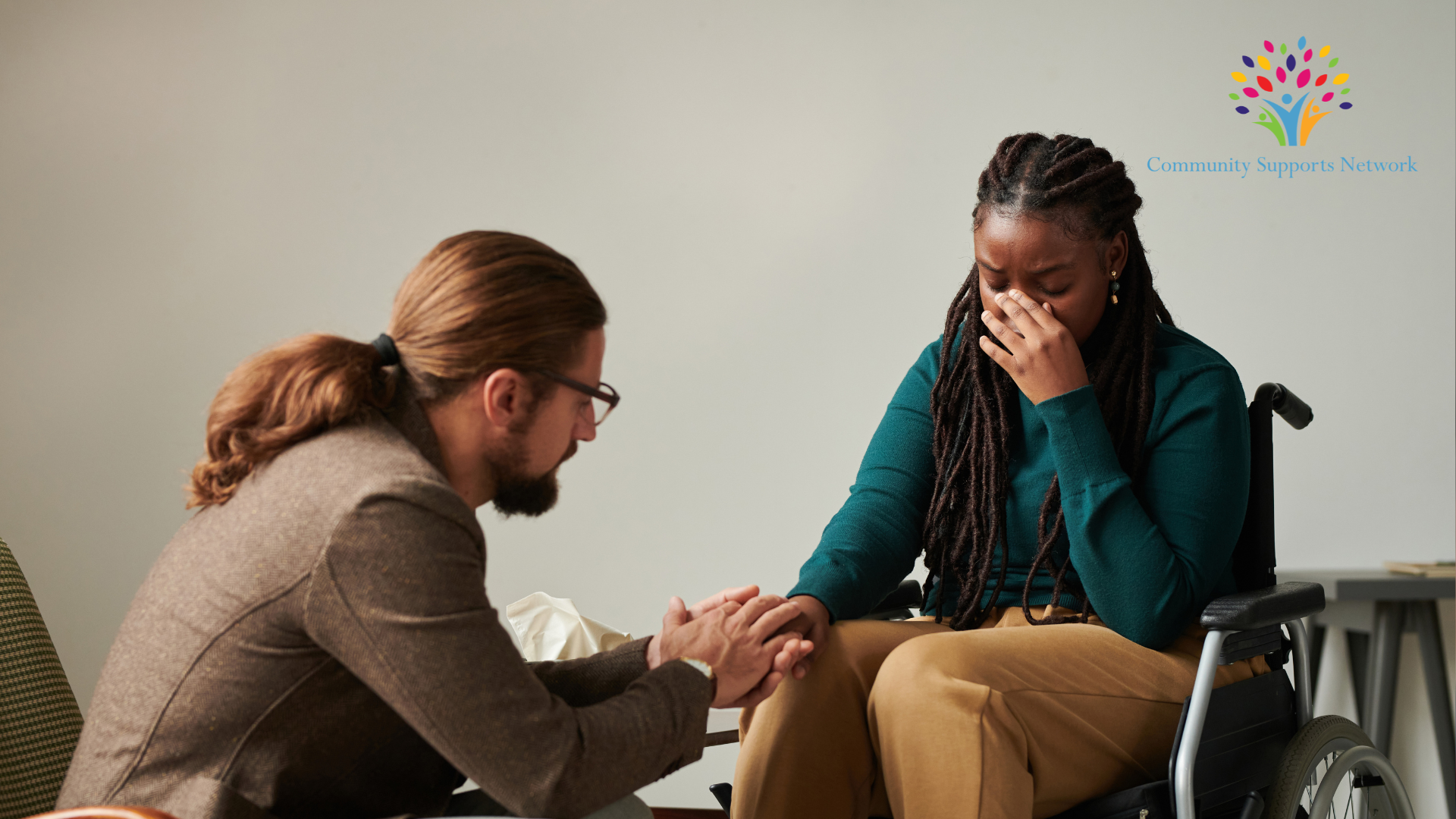
    Photo of a caregiver comforting a person with a disability who is undergoing mental stress arising from the challenges she faces on a daily basis.  This image is illustrative of the importance of recognizing Mental Health Awareness month, which helps raise awareness on topics covered in our blog post today.

    Each May, Mental Health Awareness Month serves as an important reminder that mental health is a critical part of overall well-being. While conversations around mental health have become more common in recent years, one group is still too often left out of the discussion: individuals with disabilities.

    At Community Supports Network (CSN), we believe mental wellness should be part of every conversation around disability support, inclusion, and quality of life. Individuals with intellectual, developmental, and physical disabilities experience the same range of emotions, stressors, and mental health challenges as anyone else — and in many cases, they face additional barriers that can make those struggles even more difficult to navigate.

    Mental Health and Disability: The Overlooked Connection

    According to the Centers for Disease Control and Prevention (CDC), adults with disabilities report experiencing frequent mental distress at significantly higher rates than adults without disabilities. In fact, nearly one in three adults with disabilities experiences frequent mental distress.

    There are many reasons for this disparity. Individuals with disabilities may experience:

    • Social isolation or exclusion
    • Bullying or discrimination
    • Difficulty accessing inclusive programs and services
    • Challenges with communication or self-advocacy
    • Financial stress or barriers to employment
    • Limited access to transportation or healthcare
    • Trauma related to medical experiences or societal stigma

    For some individuals, mental health challenges may present differently than what people traditionally expect. Anxiety, depression, frustration, withdrawal, changes in routine tolerance, or behavioral changes can all sometimes be signs that someone is struggling emotionally.

    Unfortunately, mental health needs are often overlooked or misunderstood in the disability community. Behaviors may be dismissed as “part of the diagnosis” rather than explored with compassion and support.

    Access to Mental Health Care Matters

    Despite the growing awareness around mental health, individuals with disabilities continue to face significant barriers to care.

    Many providers may not have experience working with individuals with intellectual or developmental disabilities. Communication differences, transportation limitations, sensory needs, and a lack of accessible services can all impact someone’s ability to receive meaningful mental health support.

    Caregivers and family members may also struggle to find providers who understand both disability and mental health together — rather than treating them as separate conversations.

    Creating a more inclusive mental health system means ensuring that services are:

    • Accessible
    • Person-centered
    • Trauma-informed
    • Communication-friendly
    • Inclusive of caregivers and support teams when appropriate

    Everyone deserves the opportunity to feel heard, supported, and emotionally safe.

    Supporting the Whole Person

    At CSN, we believe quality support means seeing the whole person — not just a diagnosis or support plan.

    Mental wellness can be supported in many ways through community inclusion, meaningful relationships, structured routines, employment opportunities, self-expression, recreation, and environments where individuals feel respected and valued.

    Sometimes support looks like helping someone build social connections. Sometimes it means recognizing when someone may need additional emotional support or professional services. And sometimes it simply means creating spaces where people feel accepted exactly as they are.

    Mental health conversations should include everyone.

    Breaking the Stigma Together

    One of the biggest barriers to mental health support is stigma. For individuals with disabilities, that stigma can be even greater.

    Mental health challenges are not a weakness, and needing support is never something to be ashamed of. By continuing to have open, compassionate conversations, we can help create communities where individuals feel empowered to ask for help and receive support without judgment.

    This Mental Health Awareness Month, we encourage everyone to:

    • Check in on friends, family members, and caregivers
    • Normalize conversations around mental health
    • Advocate for accessible and inclusive services
    • Practice empathy and patience
    • Remember that emotional well-being matters for everyone

    At the heart of true inclusion is recognizing the humanity, dignity, and emotional experiences of every individual.

    If you or someone you know is struggling, support is available. The Suicide & Crisis Lifeline can be reached by calling or texting 988 anytime.

    Together, we can continue building communities where mental health support is accessible, inclusive, and compassionate for all.

    For more information or to connect with our team, don’t hesitate to reach out!

  • Why Paying Family Caregivers Matters

    A Closer Look at What’s at Stake

    Photo of the director of the U.S government division governing. health care, Robert F. Kennedy, whose recent statements are raising  concern in the mental health care community.  This is relevant in our blog post today about why paying family caregivers matters, because many caregivers must forego other paid employment to provide care for family members with disabilities or mental health conditions.

    Across the disability community, there has been growing conversation about Medicaid-funded services—specifically, programs that allow family members to serve as paid caregivers.

    Recently, national attention has been drawn to this model, with concerns raised about potential fraud and misuse within these programs. (disabilityscoop.com)

    And while accountability in any system is important, it’s equally important to understand the full picture—because for many families, this isn’t just a policy discussion. It’s their daily reality.


    What This Actually Looks Like for Families

    At Community Supports Network, we work closely with individuals and families navigating a wide range of needs.

    For many of the individuals we support, care is not simply about assistance—it’s about trust, familiarity, and safety.

    In some cases:

    • A child may only feel comfortable with a parent
    • An individual may rely on a sibling who understands their communication style
    • Changes in caregivers can lead to anxiety, behavioral challenges, or regression

    For these families, having a trusted caregiver isn’t a preference—it’s essential.


    When Caregiving Becomes a Full-Time Role

    What often goes unseen is the level of care required behind the scenes.

    Family caregivers are frequently responsible for:

    • Personal care (feeding, bathing, hygiene)
    • Medical needs and monitoring
    • Behavioral support
    • Transportation to therapies and appointments
    • Coordinating services, paperwork, and advocacy

    This is not occasional support—it is full-time, highly involved care.

    In many cases, parents or family members are forced to leave the workforce entirely to meet these needs.


    The Reality of the Caregiver System

    There is also a broader challenge that impacts this conversation:
    The current nationwide shortage of direct support professionals (DSPs).

    When families are approved for services, they often struggle to find consistent, reliable staff.

    As a result, family members frequently step in—not as a first choice, but as the only available option.

    Advocates emphasize that family caregivers are often “the only reliable option” due to workforce shortages and the complexity of care needs. (The Arc)
    Families would also do well not only to provide for their loved ones, but collaborating with agencies in the event they’re unable to fulfill the role the role of caregiver.


    Understanding the Fraud Concern – Without Losing Perspective

    It’s true that, like any large system, Medicaid programs must guard against fraud.

    But it’s equally important to separate:

    • Isolated cases of misuse, and
    • The legitimate, necessary support that millions of families rely on

    In fact, family caregivers provide an enormous amount of care—much of it unpaid—valued at over $1 trillion annually in the U.S. (disabilityscoop.com)

    This highlights a critical truth:
    Family caregiving is not an exception—it is a foundational part of how care is delivered.


    What Could Be at Risk

    If policies were to significantly restrict or eliminate the ability for family members to be paid caregivers, the impact could be far-reaching:

    1. Increased Financial Strain

    Families who already rely on a single income—or no income—could face additional hardship.

    2. Disruption in Care

    Individuals who depend on familiar caregivers may experience instability, stress, or setbacks.

    3. Greater Pressure on an Already-Strained Workforce

    With fewer family caregivers, demand for outside staff would increase in a system that is already understaffed.

    4. Risk of Institutionalization

    Without adequate in-home support, some families may be left with no choice but to seek more restrictive care settings.


    A Balanced Path Forward

    This conversation does not need to be political—it needs to be practical.

    We can hold two truths at once:

    • Oversight and accountability are important
    • And family caregivers play a vital, irreplaceable role in supporting individuals with disabilities

    The goal should not be to eliminate these supports, but to strengthen them responsibly—ensuring integrity while preserving access.


    Why This Matters

    At its core, this issue is about dignity, choice, and sustainability.

    People with disabilities deserve the ability to receive care:

    • In their homes
    • From people they trust
    • In a way that supports their independence and well-being

    And families deserve recognition and support for the essential role they play every day.


    Final Thought

    Behind every policy discussion are real people—families making impossible decisions, caregivers doing the work that keeps their loved ones safe, and individuals who simply want to live comfortably in their communities.

    As this conversation continues, it’s critical that those realities remain at the center.


  • Honoring National Nurses Week (May 6–12)

    Each year from May 6–12, National Nurses Week gives us the opportunity to recognize the critical role nurses play across every part of our healthcare system. From hospitals to homes, nurses are often the steady presence behind quality care—bringing not only clinical expertise, but compassion, advocacy, and a deep commitment to the individuals they serve.

    In community-based settings especially, nurses play a unique and essential role. They help bridge the gap between medical care and everyday life—supporting individuals, educating caregivers, and ensuring that care plans are not only effective, but truly person-centered.

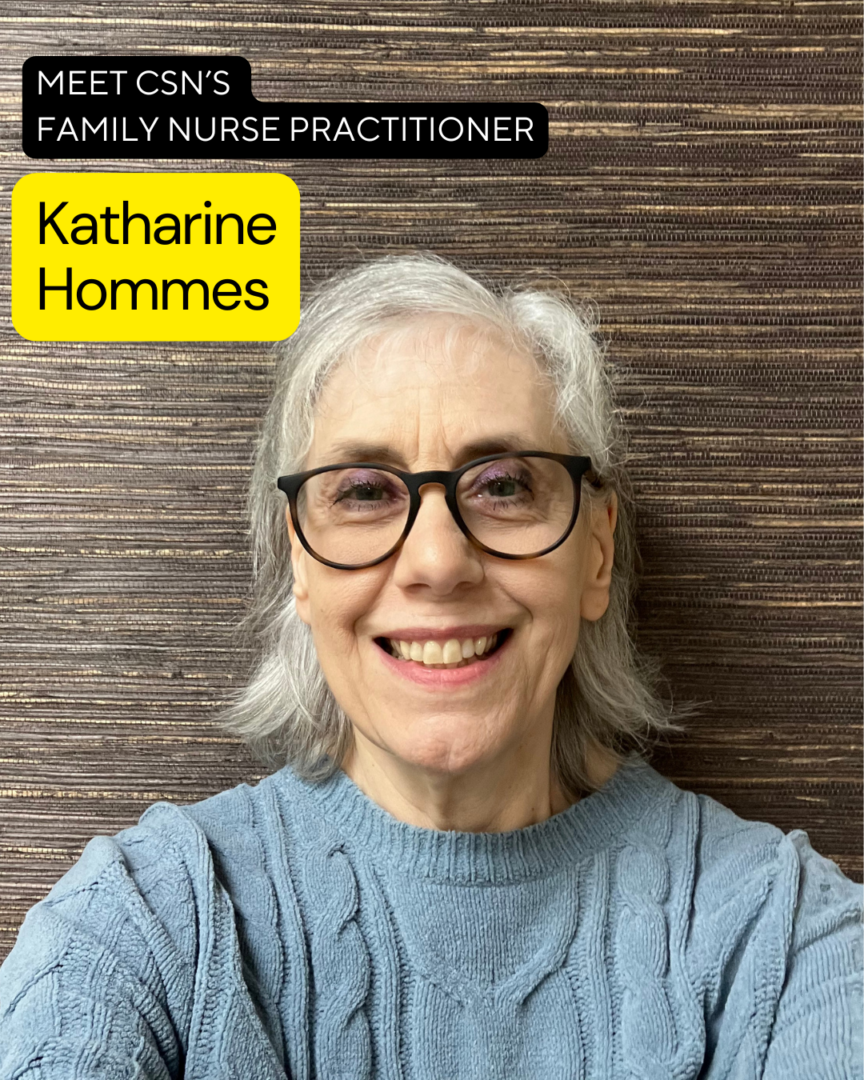
    At Community Supports Network (CSN), we are proud to have nurses who embody this work every day. This Nurses Week, we’re honored to spotlight one of those individuals—Katharine Hommes.

    With nearly 40 years of experience in the nursing field, Katharine brings a depth of knowledge that spans clinical care, healthcare systems, and patient advocacy. She began her career as a floor nurse at Clara Maas Medical Center before expanding into roles in quality assurance, utilization review, and healthcare management. She later earned a master’s degree in public health, followed by a master’s in nursing, becoming a Family Nurse Practitioner.

    Katharine went on to specialize in urology and endocrinology and trained as a Registered Nurse First Assistant (RNFA), assisting physicians in the operating room. Throughout her career, she has worked with a wide range of populations, including individuals with developmental disabilities—experience that continues to inform her work today.

    In 2025, Katharine made the transition to CSN, returning to her nursing roots with a focus on what she is most passionate about: education, assessment, and hands-on support.

    At CSN, Katharine plays a vital role in supporting both individuals and staff. She conducts nursing assessments, develops care plans, and maintains ongoing communication with individuals and their families to ensure needs are being met. She also provides essential training and education to Direct Support Professionals, helping them better understand medical conditions, medication management, and individualized care needs.

    Her work ensures that care is not only delivered—but understood, supported, and sustained.

    Katharine’s impact extends beyond clinical care. She is a resource, an educator, and a steady presence for both staff and families navigating complex needs. Her ability to combine experience with compassion is what makes her work so meaningful.

    During Nurses Week (May 6–12), we celebrate Katharine—and all nurses—who continue to make a difference through their dedication, knowledge, and unwavering commitment to care.

    To learn more head to our website to connect!

  • Navigating Handicap Placards in New Jersey

    What Families Need to Know

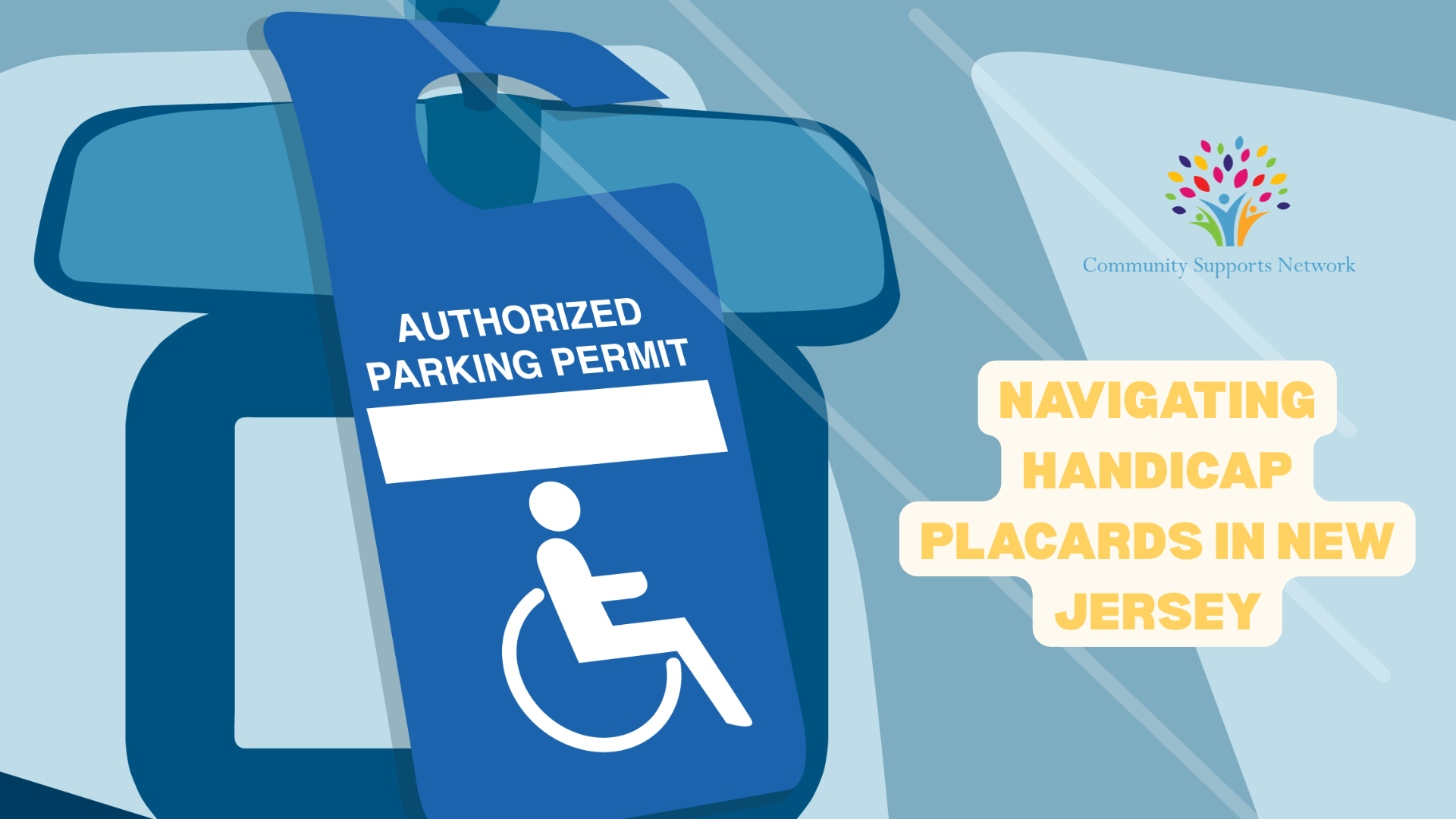
    Graphic artwork depicting a handicap parking permit hanging on a rearview mirror, with the words "navigating handicap placards in New Jersey" which is the topic of this Tip Tuesday blog post.

    Written by Jessica Quarello, Brand Communications Manager

    For many families in the disability community, accessibility isn’t just about convenience—it’s about safety.

    Recently, I went through the process of renewing my daughter Adeline’s handicap placard. Because she is a minor, we are required to recertify every three years, which means revisiting paperwork, doctor’s forms, and the full application process regularly. (NJ.gov)

    Photo of Adeline and Jessica, her mother, who is our Brand Communications Manager at Community Supports Network LLC.

    And it got me thinking—this is something so many families rely on, but not everyone fully understands.

    Why This Matters

    When most people think of handicap placards, they think of physical mobility limitations.

    But for many individuals with disabilities, the need goes far beyond that.

    Hi! My name is Jess and I am the Brand Communications Manager here at CSN. I also happen to have a five year old daughter with Down syndrome. For my daughter, Adeline, a placard is essential due to elopement—a safety concern that can make even a simple parking lot feel overwhelming or dangerous.

    Having accessible parking:

    • Reduces distance and risk
    • Helps maintain supervision
    • Creates a safer transition from car to destination

    For families like ours, it’s not about convenience—it’s about preventing unsafe situations before they happen.

    What Is a Handicap Placard in NJ?

    In New Jersey, a Person with a Disability placard allows a vehicle carrying a qualified individual to park in designated accessible parking spaces.

    There are two main types:

    • Permanent placards (valid for 3 years)
    • Temporary placards (valid for 6 months, with limited renewal) (ParkingMD)

    Permanent placards are free, while temporary ones have a small fee. (YouTube)

    Who Qualifies?

    Eligibility is determined by a qualified medical professional, not just diagnosis alone.

    In general, individuals may qualify if they:

    • Have significant mobility limitations
    • Cannot walk long distances safely
    • Require assistance or supervision due to a condition
    • Have neurological, developmental, or medical conditions that impact safe mobility

    A physician, nurse practitioner, or other qualified provider must certify the need as part of the application. (NJ.gov)

    For children especially, providers can consider safety risks, including behaviors like elopement, when determining eligibility.

    How to Apply (New Jersey)

    To apply for a placard or license plate, families must:

    1. Complete the Application for Vehicle License Plates and/or Placard (Form SP-41)
    2. Have a medical provider complete and sign the certification
    3. Submit the application:
      • In person at an MVC agency, or
      • By mail to the NJ MVC Special Plate Unit (NJ.gov)

    If approved:

    • You’ll receive a placard + ID card
    • The placard can be used in any vehicle the individual is in

    Renewal (What Most People Don’t Realize)

    Even for permanent disabilities, New Jersey requires:

    • Recertification every 3 years
    • A new medical certification dated within 60 days of submission (NJ.gov)

    There is no fee to renew, but the process essentially starts over each time. (NJ.gov)

    For families with children, this often means:

    • Scheduling doctor visits
    • Completing paperwork repeatedly
    • Navigating timing and deadlines

    Placard vs. License Plate

    Families can choose between:

    • A placard (portable, usable in any car)
    • A license plate (assigned to one vehicle)

    Placards tend to be more flexible—especially for families who:

    • Use multiple caregivers
    • Travel in different vehicles
    • Share transportation responsibilities

    A Note for Families

    If you’re a parent navigating this process, here’s what I’ll say:

    If your child needs it—for safety, mobility, or access — you are not asking for too much.

    You are advocating.

    And while the process may feel repetitive or frustrating, these tools exist to support real needs.

    Final Thoughts

    Accessible parking is often seen as a small accommodation — but for many families, it’s a critical piece of independence, safety, and participation in everyday life.

    At CSN, we believe in meeting individuals where they are — and that includes making sure families have access to the tools that help them safely navigate their communities.

Serving Morris, Passaic, Bergen, Essex, Hudson, Union, Warren, Somerset, Hunterdon & Sussex Counties