Tag: guidance and support

  • Easing Back Into Routine: Supporting Individuals After the Holidays

    Image showing wooden cubes with one digit in each, showing year number 2025 changing to 2026, which means that the holidays have ended.  This relates to our topic in this blog post, which is about getting back into a routine while supporting individuals with special needs.

    The weeks following the holidays often bring big transitions for individuals with disabilities. After days filled with celebrations, family gatherings, new environments, and unpredictable schedules, getting back into everyday routines can feel both comforting and overwhelming. For many, this shift requires patience, reassurance, and thoughtful, person-centered support. At Community Supports Network (CSN), we understand that transitions—especially seasonal ones—can impact emotional regulation, sensory needs, and daily functioning. By approaching this time with intention, DSPs, caregivers, and families can help individuals feel grounded and confident as they re-enter familiar rhythms after the holidays.

    How To Easily Get Back into Routine

    Maintain Predictable Daily Touchpoints

    Even if full routines are still settling back into place, keeping consistent anchors can help individuals feel secure. Simple touchpoints like morning greetings, predictable mealtimes, or shared evening activities provide stability when everything else feels like it’s changing.

    Offer Gentle Sensory Support

    Holiday environments are often loud, crowded, and highly stimulating. As individuals transition back to typical days, sensory needs may be heightened. Quiet spaces, soft lighting, weighted blankets, noise-reducing headphones, or familiar sensory items can help the nervous system settle.

    Reintroduce Structure Gradually

    Instead of jumping immediately into a full schedule, consider easing back with visual schedules, shorter periods of activity, planned rest breaks, and previewing what’s next. Gradual structure helps individuals regain confidence in routines without feeling rushed or overwhelmed.

    Validate Feelings and Normalize Transitions

    It’s normal for individuals to feel tired, anxious, excited, or unsure at the start of a new year. Acknowledging these feelings—“It’s okay that things feel different today”—can provide powerful emotional support. Validation strengthens self-regulation and builds trust during moments of change.

    Reconnect Through Choice and Engagement

    Offer opportunities for individuals to choose activities they enjoy or revisit favorite routines. Whether it’s listening to music, cooking, visiting the community, or working on a familiar skill, positive engagement helps reestablish a sense of normalcy and independence.

    Prepare for Upcoming Schedules

    Previewing the upcoming week, updating visual calendars, and discussing upcoming activities can help individuals feel ready and informed. For those who rely on predictability, this preparation reduces anxiety and sets the tone for a smooth transition.

    Looking Ahead

    The return to routine after the holidays is an important moment of reconnection—an opportunity to create comfort, rebuild stability, and support individuals at their own pace. By approaching this transition with empathy and person-centered strategies, DSPs and caregivers help individuals begin the new year feeling supported, understood, and ready for what’s ahead.

    Editor’s Note: Like the advice and tips in this post? Click here to find more posts like this!

  • Goal Setting the Person-Centered Way: Supporting Individuals in 2026

    Photo looking down a road with the sun rising in the background, with our company logo at the top and the word goals in large font below.  This headlines our blog post about person-centered goals for supporting our individual clients in 2026 and beyond.

    As we welcome a new year, many people begin setting goals, resolutions, or intentions for the months ahead. For individuals with disabilities, this season provides a meaningful opportunity to explore what matters to them — not just what others expect. At Community Supports Network (CSN), we believe that goal setting should always be person-centered, empowering, and rooted in each individual’s strengths, preferences, and vision for their own life.
    Rather than focusing on resolutions that fade by February, person-centered goals help individuals build skills, confidence, and purpose throughout the entire year. These goals can be small or big, simple or ambitious — what matters most is that the individual has ownership of the process. Below are ways DSPs, families, and caregivers can help support meaningful goal setting in 2026.

    Tips for Person-Centered Goal Setting

    1. Start With What the Individual Enjoys

    The most successful goals grow from genuine interests. Ask open-ended questions or offer choices: “What would you like to do more of this year?” “What makes you happy or excited?” “Is there something new you want to try?” Interests often lead naturally to skill-building opportunities — whether it’s cooking, community outings, fitness, or creative expression.

    2. Break Goals Into Achievable Steps

    Large goals can feel overwhelming. Breaking them into small, manageable steps helps individuals experience success and stay motivated. For example: Instead of “make more meals independently,” start with choosing a recipe, gathering ingredients, practicing one skill at a time (measuring, mixing, etc.). Each step is progress worth celebrating.

    3. Use Visuals and Supports to Clarify the Path

    Visual schedules, checklists, and simple planning tools help individuals understand what a goal looks like in action. Communication supports such as AAC, picture cards, or written prompts ensure everyone can participate meaningfully in the process.

    4. Celebrate Progress — Not Just Outcomes

    Every skill gained, step completed, or moment of independence matters. Celebrating small wins builds confidence, motivation, trust, and long-term success. Recognition doesn’t need to be elaborate — a high-five, a note, or a shared moment of reflection can make a big impact.

    5. Revisit and Adjust Throughout the Year

    Person-centered goals evolve. Interests may change, routines shift, or new opportunities arise. Support teams should feel comfortable revisiting and modifying goals to keep them relevant and meaningful. Checking in regularly ensures goals remain achievable, aligned with the individual’s preferences, and supportive of daily growth.

    6. Make the Process Collaborative and Empowering

    The strongest goals come from partnership. DSPs, guardians, families, and the individuals themselves all play a role — but the individual should remain at the center. Ask for feedback. Encourage choices. Support self-advocacy. Person-centered planning is not about telling someone what they should do — it’s about helping them discover what they want to do.

    Looking Ahead to 2026

    As we step into a new year, person-centered goal setting offers a meaningful pathway toward independence, learning, and fulfillment. Whether someone aims to build daily living skills, connect more with their community, strengthen communication, or explore new interests, each goal is an opportunity for growth. At CSN, we remain committed to empowering individuals to define their own versions of success — and supporting them every step of the way.

    Looking for More Resources?

    CSN is here to support individuals, families, and care teams with person-centered tools and programs designed to promote independence and meaningful daily living.
    Explore more of our services and resources on our website.

  • Supporting Individuals Through the Quiet Week Between Holidays

    Photo of family celebrating the holidays with a caption that reads "supporting individuals through the quiet week between holidays".

    The days between Christmas and New Year’s move at a different rhythm — slower mornings, lighter schedules, and a brief pause in the routines that shape everyday life. While many people welcome this downtime, it can feel unfamiliar or even unsettling for individuals with disabilities who rely on structure, predictability, and consistent support.

    At Community Supports Network (CSN), we understand how important this “in-between” week can be. With a thoughtful, person-centered approach, these quieter days can become meaningful opportunities for connection, comfort, and gentle engagement.

    Here are a few ways DSPs, caregivers, and families can support individuals during this unique stretch of time:

    • Keep a simple, steady rhythm.
    Even when programs close or schedules change, maintaining small daily anchors — morning greetings, shared meals, favorite activities — helps provide orientation and stability.

    • Create calming sensory spaces.
    After the stimulation of holiday gatherings, many individuals benefit from quiet corners, soft lighting, familiar textures, or soothing music to help regulate and reset.

    • Choose low-pressure activities.
    Baking, puzzles, art projects, stretching, listening to music, or watching a favorite movie can offer meaningful connection without overwhelming the senses.

    • Normalize the shift in routine.
    Sometimes the reassurance that “things feel different this week, and that’s okay” is enough to ease uncertainty and help someone settle into the rhythm of the day.

    • Offer gentle previews of what’s ahead.
    Looking at next week’s schedule or reviewing upcoming January activities can prepare individuals for the transition back into regular programming.

    This quiet week may be short, but it holds real value. Slower days and softer moments can foster connection, build trust, and help individuals feel grounded as the year comes to a close. With care and intention, we can make this time not just manageable — but meaningful.

    Editor’s note: If you liked the tips in this post, check out our Tip Tuesday series of blog posts for more helpful advice and tips!

  • The One Phrase That Builds Confidence in Every Interaction

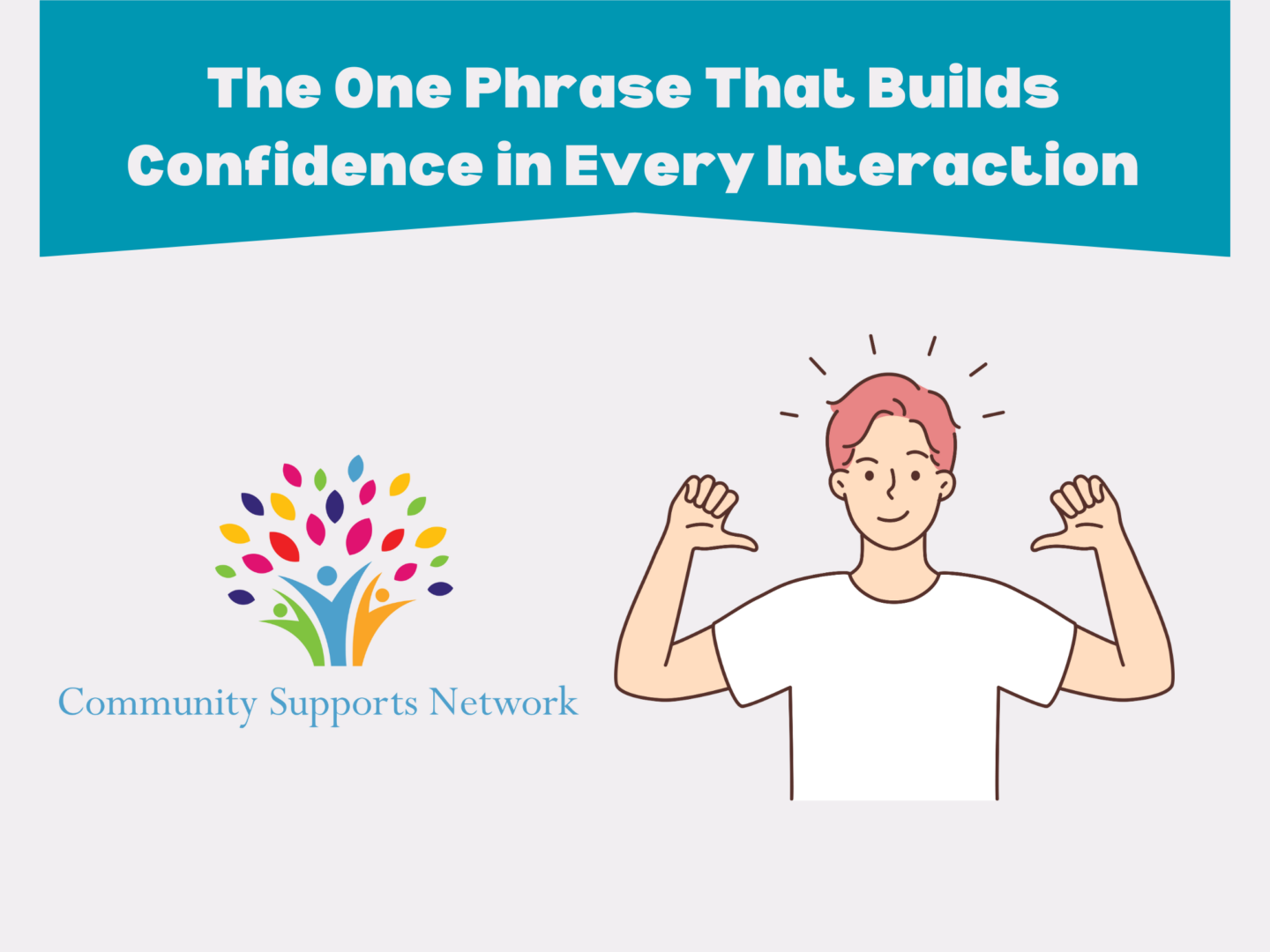
    Image containing our logo and a drawing of a young adult with his arms raised and thumbs pointing toward himself, showing confidence in his abilities.  This post on the topic of building confidence is part of our "Tip Tuesday" blog post series by Community Supports Network.

    At Community Supports Network (CSN), we believe that progress starts with the way we communicate. Words shape confidence, connection, and how supported someone feels — especially during moments of learning, challenge, or change. One of the simplest and most powerful tools we use every day is strength-based language (more info here), a communication style that focuses on capability rather than limitation. And the best part? It’s incredibly easy to begin using right now.

    Try This Swap: “Be careful!” → “You’ve got this — I’m right here if you need me.”

    “Be careful” comes from a good place, but it can create hesitation or fear. Saying “You’ve got this — I’m right here if you need me” encourages independence while still offering safety and support. It shifts the focus from what could go wrong to what the person can do.

    Here Are a Few More Powerful Language Swaps That Make a Big Difference:

    ❌ “No, not like that.”

    ✅ “Let’s try it together another way.”

    This keeps the moment collaborative rather than corrective.

    ❌ “You can’t do that alone.”

    ✅ “Let’s build up to doing this together.”

    This sets a path forward and reinforces that progress is possible.

    ❌ “Hurry up.”

    ✅ “Take your time — we’re not rushing.”

    This reduces pressure, especially for individuals who need more processing time or sensory support.

    Why This Matters

    Strength-based language:

    • Builds confidence
    • Encourages autonomy
    • Reduces anxiety
    • Strengthens relationships between caregivers, DSPs, and the individuals we serve
    • Helps people feel seen for who they are, not what they struggle with

    At CSN, we use these strategies to create supportive, empowering environments where everyone has the chance to grow at their own pace — and feel proud while doing it.

    Tip to Try This Week

    Choose one language swap and use it throughout your week. Notice how the energy of the interaction changes — for you and for the person you’re supporting. Small shifts lead to meaningful progress. 💙

    Looking for more ways to support skill-building, independence, and confidence? Explore more resources and stories on the CSN blog and stay connected with us for weekly tips.

  • Inclusive Holidays

    Holiday themed image of pine tree branches on a green background with the words "How to create welcoming low-stress celebrations for people with disabilities", for our blog post discussing the topic of creating inclusive holidays.

    The holiday season is often described as magical, joyful, and full of tradition — but for many individuals with disabilities and their families, this time of year can also bring sensory overload, routine disruptions, and added stress. At Community Supports Network (CSN), we know that everyone deserves to feel included, comfortable, and valued during holiday gatherings. With a little planning and a lot of empathy, we can all help make celebrations more accessible and meaningful for everyone.

    Create Sensory-Friendly Spaces

    Holiday environments are often filled with bright lights, loud music, large crowds, and strong smells — all of which can be overwhelming. Providing a quiet, low-stim room gives people a chance to reset whenever needed. Soft lighting, noise-reducing headphones, weighted blankets, or familiar items from home can make a big difference.

    Honor Routines and Predictability

    Changes in routine can be difficult, especially during a season full of unexpected events. Preparing visual schedules, communicating plans clearly, and offering advance notice of transitions can help reduce anxiety. Keeping certain familiar routines in place — like bedtime or mealtime rituals — can help provide a sense of stability.

    Offer Choices, Not Pressure

    Not everyone wants to join every activity, and that’s okay. Instead of insisting someone sit through a long dinner, participate in a group game, or take photos, offer options. Choice empowers individuals, reduces stress, and supports independence — values at the core of CSN’s mission.

    Think About Accessibility

    From physical accessibility to communication preferences, small adjustments can open doors for meaningful participation. Ensure pathways are clear, chairs are easy to move, and activities can be adapted. For individuals who use communication devices or need extra processing time, be patient and supportive.

    Be Mindful of Sensory-Friendly Foods

    Holiday meals can be filled with unfamiliar textures, smells, and flavors. Offer safe foods alongside traditional dishes without pressure to try new items. This simple act of respect can help everyone feel comfortable at the table.

    Celebrate in Ways Everyone Can Enjoy

    Focus on connection, not perfection. Adapt games, break activities into small steps, or incorporate interests and strengths. Whether it’s decorating cookies, driving around to look at holiday lights, or enjoying a familiar movie, inclusion flourishes when everyone feels welcome.

    Support Caregivers

    The holidays can be especially demanding for caregivers. Offering help, providing breaks, and showing genuine appreciation goes a long way. Even small gestures can lighten the emotional and physical load during an already busy season.


    Reach out!

    At CSN, we believe that inclusion isn’t seasonal — it’s a way of life. If your family is looking for support, resources, or compassionate DSP services in New Jersey, we’re here to help. Visit www.yourcsn.com to learn more about how we empower individuals and families to thrive all year long.

  • Building Independence One Step at a Time

    Why Breaking Down Tasks Matters in Disability Support

    Photo snapshot of the word "independent" from a dictionary definition explaining the meaning of that word in the English language.  In short it means that one is able to self-govern their actions.

    At Community Supports Network (CSN), we know that independence doesn’t happen all at once — it’s built one step, one choice, and one moment of trust at a time. This week, while preparing lunch with a client, we were reminded how important that approach truly is.

    The individual we were working with assumed we would handle the entire lunch preparation from start to finish, explaining that they don’t typically use the stove. It would have been easy — and faster — to simply step in and prepare everything ourselves. But that would have turned a support opportunity into a missed opportunity. Instead, we looked for moments within the task to build skills and confidence. Even though using the stove wasn’t appropriate for them right now, there were many other steps they could safely take part in. So we shifted our mindset from “doing it for them” to “doing it with them.”

    Here’s how we incorporated them into the process:
    ✅ They helped gather ingredients from the fridge and cabinets.
    ✅ We discussed each part of the recipe and what tools were needed.
    ✅ They stirred and mixed ingredients at the counter.
    ✅ We introduced basic kitchen safety concepts in real time.
    ✅ They plated the final meal and took ownership of the finished product.

    By the end, this wasn’t just “lunch someone made for me.” It became, “lunch I helped prepare.”

    How Breaking Down Tasks Helps Build Independence

    For many individuals with disabilities, being left out of tasks — even unintentionally — can reinforce the belief that they are dependent rather than capable. When we break down tasks into accessible pieces, we’re not simplifying the process — we’re strengthening it.

    Breaking a task into steps helps:
    ✅ Build confidence through achievable actions.
    ✅ Support skill development gradually over time.
    ✅ Reduce fear or anxiety around unfamiliar tasks.
    ✅ Show individuals that participation is possible, even if full independence isn’t there yet.
    ✅ Encourage pride, ownership, and self-worth.

    It’s a common misconception that being “independent” means doing everything entirely alone. In reality, independence often begins with supported participation. Even being involved in one step can open the door to stronger engagement the next time. This eventually leads to greater independence over time. When a person realizes, “I can do this part,” it shifts the narrative from limitation to possibility.

    As DSPs, caregivers, and support professionals, our role isn’t to rush to finish a task — we use that task as a bridge toward growth. That often means slowing down, asking “Where can I include them here?” and celebrating progress at every level. At CSN, we believe that success is not measured by whether someone completes an entire task alone. We see success when they gain confidence, learn something new, or feel empowered to try again.

    Next time we approach a daily task with someone we support, we can ask ourselves:

    “Am I doing this for them — or with them?”
    “Is there a step here they can safely try?”
    “How can we turn this routine moment into a chance to build independence?”

    Whether someone stirs ingredients, chooses a topping, or sets the table, these moments are not small. They are stepping stones toward confidence, self-reliance, and pride in their abilities.

    At CSN, we don’t just finish tasks — we build futures, one step at a time.

    Share your story with us or tag CSN on social media to inspire others in our community!

    Together, we can continue empowering individuals to discover what’s possible — one step at a time. Visit www.yourcsn.com to learn more!

  • Words Matter: How Language Shapes Disability Inclusion

    Graphic art illustrating a person speaking words, next to bubbles representing words spoken by others in the same conversation, wherein the language used impacts disability inclusion.

    At Community Supports Network (CSN), we believe that inclusion begins with something simple but powerful — our words. The language we use to talk about disability shapes how people are perceived, included, and valued in our communities. When we speak with respect and awareness, we help build a world where everyone belongs.

    Why Language Matters

    Language does more than describe — it defines how we think. The words we choose can either reinforce stereotypes or create understanding. Over time, society’s approach to disability language has evolved — moving away from labels that isolate toward language that empowers.

    For example, phrases like “the disabled” have shifted to “people with disabilities” to emphasize the person, not the condition. This approach, known as person-first language, reflects the idea that disability is one part of who someone is — not their entire identity.

    Person-First vs. Identity-First Language

    In recent years, there’s been an important and ongoing conversation about how people prefer to be identified.

    • Person-first language (like “a person with autism” or “a person who uses a wheelchair”) focuses on individuality before disability.
    • Identity-first language (like “an autistic person” or “a Deaf person”) centers pride in disability identity and culture.

    Neither is “right” or “wrong” — the most respectful approach is to listen and use the language someone chooses for themselves.

    Common Phrases to Rethink

    We all use language out of habit, and sometimes without realizing the impact it can have. Here are a few easy shifts to make:

    Instead of…Try Saying…
    “Suffers from” or “victim of”“Lives with” or “has”
    “Wheelchair-bound”“Uses a wheelchair”
    “Normal” or “healthy”“Non-disabled”
    “Special needs”“Support needs” or “disabled” (if preferred)

    Small changes make a big difference. Inclusive language helps everyone feel seen, respected, and part of the conversation.

    How We Practice Inclusion at CSN

    At CSN, we’re committed to modeling inclusive communication in everything we do — from the way we speak with individuals and families to the language we use in our programs, newsletters, and community outreach. We know that words are one of the first ways people experience our values.

    Our mission is not only to provide exceptional support services but also to promote a culture of respect and belonging — across New Jersey and beyond.

    The Takeaway

    Language evolves, and so should we. By being mindful, open, and willing to learn, we can all help shape a more inclusive world — one word at a time.

    Want to learn more about how CSN promotes inclusion and empowerment across New Jersey? Visit our website or follow us on social media for more stories and resources.

  • Conversation Starters for Disability Employment Awareness Month

    October is more than just a month of fall colors and changing seasons—it’s a time to spotlight the importance of disability awareness, advocacy, and inclusion. At Community Supports Network (CSN), we believe one of the most powerful ways to create lasting change is also one of the simplest: having meaningful conversations.

    Talking about disability can sometimes feel intimidating—people may worry about saying the wrong thing or not knowing enough. But silence doesn’t create progress. By asking thoughtful questions, sharing stories, and opening space for dialogue, each of us can help break down barriers and foster understanding.

    Why Conversations Matter

    Conversations are where awareness becomes action. They:

    • Educate others by sharing knowledge about disabilities, accessibility, and advocacy.
    • Challenge stereotypes by providing real-life examples that humanize experiences.
    • Build connection by encouraging empathy and mutual understanding.
    • Promote inclusion by sparking ideas for how workplaces, schools, and communities can do better.

    Every dialogue—whether in the break room, at the dinner table, or during a community event—creates ripples that move us toward a more inclusive world.

    Conversation Starters You Can Use

    If you’re not sure how to begin, here are some simple, approachable ways to start a conversation during Disability Awareness Month (and beyond):

    💬 At Work:

    • “Did you know October is National Disability Employment Awareness Month? What do you think our workplace could do to be more inclusive?”
    • “I read about an employer who hired more individuals with disabilities and saw incredible results—have you seen stories like that?”

    💬 In the Community:

    • “October highlights Down Syndrome Awareness Month, ADHD Awareness Month, and Dyslexia Awareness Month. Which of these causes resonates with you most?”
    • “Have you ever attended a local awareness walk or event? I’ve been thinking about going to one this month.”

    💬 With Family & Friends:

    • “I saw that October 10 is World Mental Health Day. What are some ways we can support each other’s mental health?”
    • “I came across a story about someone thriving with spina bifida—it made me think about the importance of access to resources. What do you think helps communities be more supportive?”

    These starters aren’t about having all the answers—they’re about opening doors to meaningful dialogue.

    Tips for Meaningful Conversations

    1. Lead with curiosity. Ask questions and listen without judgment.
    2. Share stories. Personal experiences (your own or those you’ve learned from others) help make topics relatable.
    3. Stay respectful. Use person-first or identity-first language based on the preference of the individual.
    4. Don’t worry about being perfect. A genuine effort matters more than flawless wording.

    Turning Conversations Into Action

    Words are powerful, but they’re only the beginning. Once a conversation begins, you can take it further by:

    • Attending awareness events together.
    • Volunteering with organizations supporting individuals with disabilities.
    • Advocating for accessibility at work or in your community.
    • Sharing resources, blogs, or educational materials with others.

    Final Thoughts

    Disability Awareness Month reminds us that inclusion begins with dialogue. Every question asked, every story shared, and every conversation started has the potential to create understanding and spark meaningful change.

    This October, we encourage you to take the first step: start the conversation. You might be surprised by how much you learn—and how much impact you can make. 💙

    Editor’s note: If you would like to start a conversation about support services for a loved one with special needs, please feel free to contact us at any time. We are here to help!

  • Tip Tuesday: 5 Ways to Make Medical Visits Less Stressful

    Tip Tuesday: How to make medical visits less stressful for people with disabilities.

    Doctor visits are an important part of staying healthy, but for individuals with disabilities and their families, they can also bring stress and anxiety. Unfamiliar settings, long wait times, and sensory challenges can make appointments overwhelming — but with a little preparation, they can go much more smoothly.

    At Community Supports Network (CSN), we know that planning ahead and advocating for individualized care makes a world of difference. Here are five practical tips to help you feel more confident and prepared for your next medical visit:

    1. Prepare Ahead of Time

    Before the appointment, write down:

    • A list of symptoms, concerns, or questions you want to address.
    • Updates on any medications or therapies.
    • Important details about changes in behavior, sleep, or eating habits.

    This preparation helps ensure nothing gets overlooked when you’re face-to-face with the provider.

    2. Bring Comfort Items

    A doctor’s office can be full of overwhelming sights, sounds, and smells.

    • Pack a comfort item such as a favorite toy, blanket, or weighted lap pad.
    • Noise-canceling headphones or sunglasses can help reduce sensory overload in busy waiting rooms.
    • A small snack or drink (if allowed) can also provide comfort during long waits.

    3. Use a Visual Schedule or Social Story

    For many individuals, especially children, knowing what to expect can help reduce anxiety.

    • Create a visual schedule that shows each step of the visit, from check-in to leaving.
    • If possible, role-play the appointment at home using a social story or practice kit (pretend stethoscope, bandages, etc.).

    This approach builds familiarity and confidence.

    4. Advocate for Your Needs

    You are your loved one’s best advocate!

    • Let the office staff know about any accommodations your family member may need, such as extra time, a quiet room, or specific communication methods.
    • Don’t hesitate to ask for instructions in plain language or written form if needed.
    • Share any relevant care plans or notes from other specialists so everyone is on the same page.

    5. Plan for Downtime After the Appointment

    Medical visits can be emotionally and physically exhausting.

    • Schedule some calm, recovery time after the appointment, whether that’s relaxing at home, going for a quiet walk, or watching a favorite movie.
    • This helps prevent overwhelm and allows everyone to decompress.

    Final Thoughts

    Healthcare can be challenging to navigate, but with the right preparation and mindset, doctor visits can become more manageable and less stressful. At CSN, we’re here to support families in every step of their journey — ensuring individuals with disabilities receive the care, respect, and compassion they deserve.

    By taking small steps to plan ahead, you can turn appointments into positive experiences that build trust and confidence for the future.

    Written by Jessica Quarello, Brand Communications Manager

  • Breaking Down Barriers: How Disability Services Work in New Jersey (A Family Guide)

    Navigating supports in New Jersey can feel like alphabet soup—NJEIS, CSOC, DDD, HCBS, NJCAT. Here’s a clear, step-by-step map of who to call, when to apply, and what to expect—from birth through adulthood.


    Birth–Age 3: Early Intervention (NJEIS)

    If you’re concerned about a child’s development before age 3, start with the New Jersey Early Intervention System (NJEIS). It’s the statewide program (run by NJ Department of Health) that evaluates and provides services for infants and toddlers with delays or disabilities. Families can self-refer; services typically end at the child’s third birthday.

    For children 3 and older, referrals typically shift to the local school district; families can also use Project Child Find (800-322-8174).


    Up to Age 21: Children’s System of Care (CSOC) / PerformCare

    For youth with intellectual/developmental disabilities (I/DD), mental health needs, or substance-use challenges, New Jersey’s Children’s System of Care (CSOC) is the public front door.
    PerformCare is the 24/7 single point of access for eligibility and service coordination under CSOC:
    📞 1-877-652-7624
    🌐 www.performcarenj.org


    Planning the Transition to Adulthood (Around 18–21)

    You can apply to the Division of Developmental Disabilities (DDD) at age 18, but DDD’s adult services start at 21 (while school-based services can continue through 21). Families should begin transition planning with the school IEP team and explore DDD eligibility well before the 21st birthday so services can start smoothly.
    Learn more: DDD Eligibility


    Age 21+: Division of Developmental Disabilities (DDD)

    DDD administers New Jersey’s Home and Community-Based Services (HCBS) for adults with I/DD via two Medicaid waiver programs:

    • Supports Program (SP): for adults living with family or independently in the community.
    • Community Care Program (CCP): includes options for licensed residential settings with additional clinical criteria.
      📘 Supports Program Manual

    Key Requirements & Steps

    1. Medicaid eligibility
      You must have NJ FamilyCare Medicaid to receive ongoing DDD services.
      NJ FamilyCare Info
    2. NJCAT assessment
      DDD uses the New Jersey Comprehensive Assessment Tool (NJCAT) to measure support needs in self-care, behavioral, and medical areas.
      NJCAT Overview
    3. Budgets by tier
      Your NJCAT score determines your tier and annual budget in the Supports Program.
      Budget Tier Table – Effective Jan 1, 2024
    4. Choose a Support Coordination Agency (SCA)
      Once eligible/enrolled, adults select a Support Coordination Agency. Support Coordinators help develop the Individualized Service Plan (ISP), locate providers, and make changes as needs evolve.
      Search for SCAs and Providers

    Self-Directed Options

    New Jersey offers Self-Directed Employee (SDE) models where individuals can hire their own staff and purchase certain approved services.
    Two models are available:

    • Vendor Fiscal/Employer Agent (VF/EA)
    • Agency With Choice (AWC)

    As of 2025, DDD is transitioning the VF/EA fiscal intermediary from PPL to Acumen, with staggered rollout through September 2025. Your Support Coordinator will guide you through model selection and enrollment.
    Self-Direction Resources


    How CSN Fits In

    • Navigation & planning: We help families prepare for key handoffs—Early Intervention → CSOC/PerformCare → DDD—so services don’t lapse.
    • Support Coordination: Once an adult enrolls with DDD, we work with support coordinators to provide this service that matches their NJCAT-based budget.
    • Self-direction support: We assist with setting up and maintaining self-directed services for long-term success.

    Quick Contacts (New Jersey)


Serving Morris, Passaic, Bergen, Essex, Hudson, Union, Warren, Somerset, Hunterdon & Sussex Counties