Tag: I/DD advocacy

  • Why Paying Family Caregivers Matters

    A Closer Look at What’s at Stake
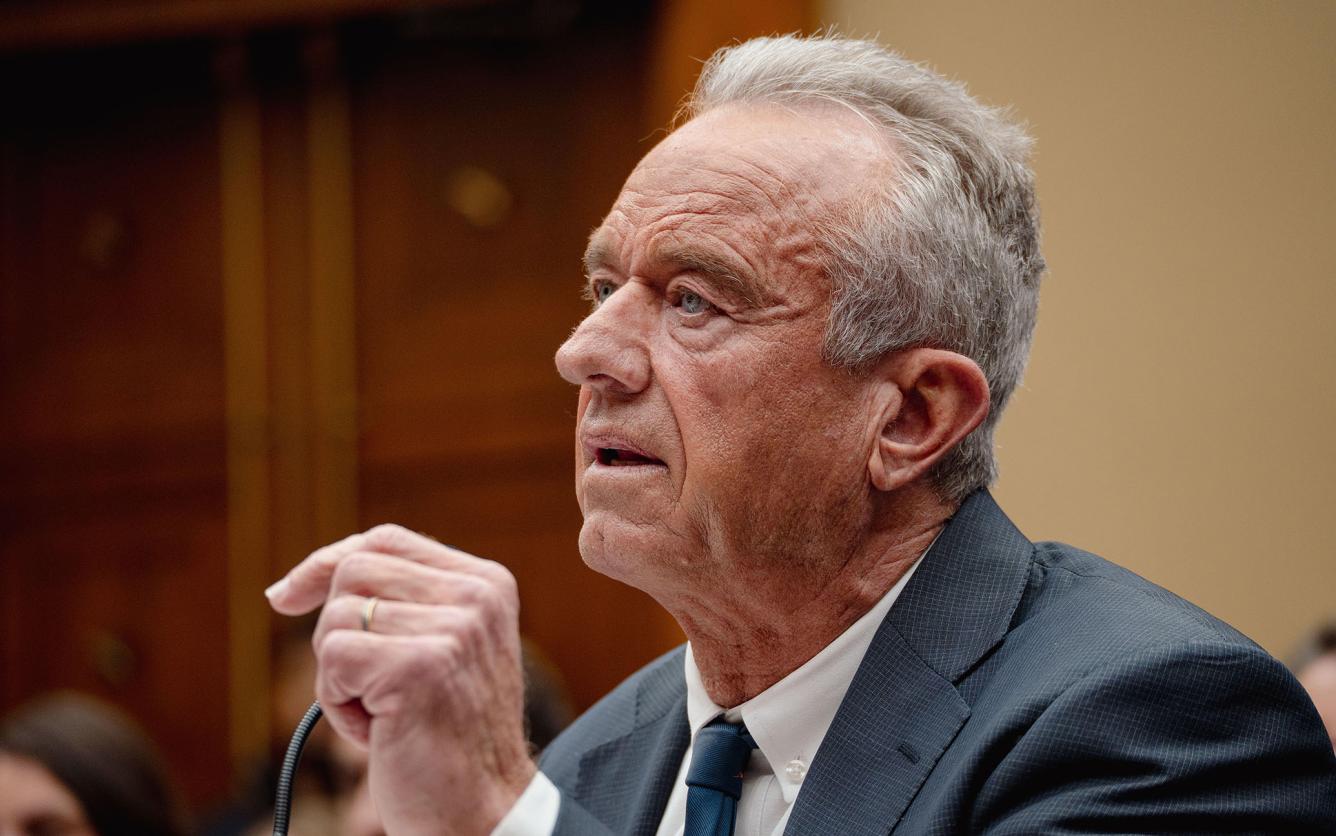
    Photo of the director of the U.S government division governing. health care, Robert F. Kennedy, whose recent statements are raising  concern in the mental health care community.  This is relevant in our blog post today about why paying family caregivers matters, because many caregivers must forego other paid employment to provide care for family members with disabilities or mental health conditions.

    Across the disability community, there has been growing conversation about Medicaid-funded services—specifically, programs that allow family members to serve as paid caregivers.

    Recently, national attention has been drawn to this model, with concerns raised about potential fraud and misuse within these programs. (disabilityscoop.com)

    And while accountability in any system is important, it’s equally important to understand the full picture—because for many families, this isn’t just a policy discussion. It’s their daily reality.


    What This Actually Looks Like for Families

    At Community Supports Network, we work closely with individuals and families navigating a wide range of needs.

    For many of the individuals we support, care is not simply about assistance—it’s about trust, familiarity, and safety.

    In some cases:

    • A child may only feel comfortable with a parent
    • An individual may rely on a sibling who understands their communication style
    • Changes in caregivers can lead to anxiety, behavioral challenges, or regression

    For these families, having a trusted caregiver isn’t a preference—it’s essential.


    When Caregiving Becomes a Full-Time Role

    What often goes unseen is the level of care required behind the scenes.

    Family caregivers are frequently responsible for:

    • Personal care (feeding, bathing, hygiene)
    • Medical needs and monitoring
    • Behavioral support
    • Transportation to therapies and appointments
    • Coordinating services, paperwork, and advocacy

    This is not occasional support—it is full-time, highly involved care.

    In many cases, parents or family members are forced to leave the workforce entirely to meet these needs.


    The Reality of the Caregiver System

    There is also a broader challenge that impacts this conversation:
    The current nationwide shortage of direct support professionals (DSPs).

    When families are approved for services, they often struggle to find consistent, reliable staff.

    As a result, family members frequently step in—not as a first choice, but as the only available option.

    Advocates emphasize that family caregivers are often “the only reliable option” due to workforce shortages and the complexity of care needs. (The Arc)
    Families would also do well not only to provide for their loved ones, but collaborating with agencies in the event they’re unable to fulfill the role the role of caregiver.


    Understanding the Fraud Concern – Without Losing Perspective

    It’s true that, like any large system, Medicaid programs must guard against fraud.

    But it’s equally important to separate:

    • Isolated cases of misuse, and
    • The legitimate, necessary support that millions of families rely on

    In fact, family caregivers provide an enormous amount of care—much of it unpaid—valued at over $1 trillion annually in the U.S. (disabilityscoop.com)

    This highlights a critical truth:
    Family caregiving is not an exception—it is a foundational part of how care is delivered.


    What Could Be at Risk

    If policies were to significantly restrict or eliminate the ability for family members to be paid caregivers, the impact could be far-reaching:

    1. Increased Financial Strain

    Families who already rely on a single income—or no income—could face additional hardship.

    2. Disruption in Care

    Individuals who depend on familiar caregivers may experience instability, stress, or setbacks.

    3. Greater Pressure on an Already-Strained Workforce

    With fewer family caregivers, demand for outside staff would increase in a system that is already understaffed.

    4. Risk of Institutionalization

    Without adequate in-home support, some families may be left with no choice but to seek more restrictive care settings.


    A Balanced Path Forward

    This conversation does not need to be political—it needs to be practical.

    We can hold two truths at once:

    • Oversight and accountability are important
    • And family caregivers play a vital, irreplaceable role in supporting individuals with disabilities

    The goal should not be to eliminate these supports, but to strengthen them responsibly—ensuring integrity while preserving access.


    Why This Matters

    At its core, this issue is about dignity, choice, and sustainability.

    People with disabilities deserve the ability to receive care:

    • In their homes
    • From people they trust
    • In a way that supports their independence and well-being

    And families deserve recognition and support for the essential role they play every day.


    Final Thought

    Behind every policy discussion are real people—families making impossible decisions, caregivers doing the work that keeps their loved ones safe, and individuals who simply want to live comfortably in their communities.

    As this conversation continues, it’s critical that those realities remain at the center.

  • Celebrating the Bond Between Siblings

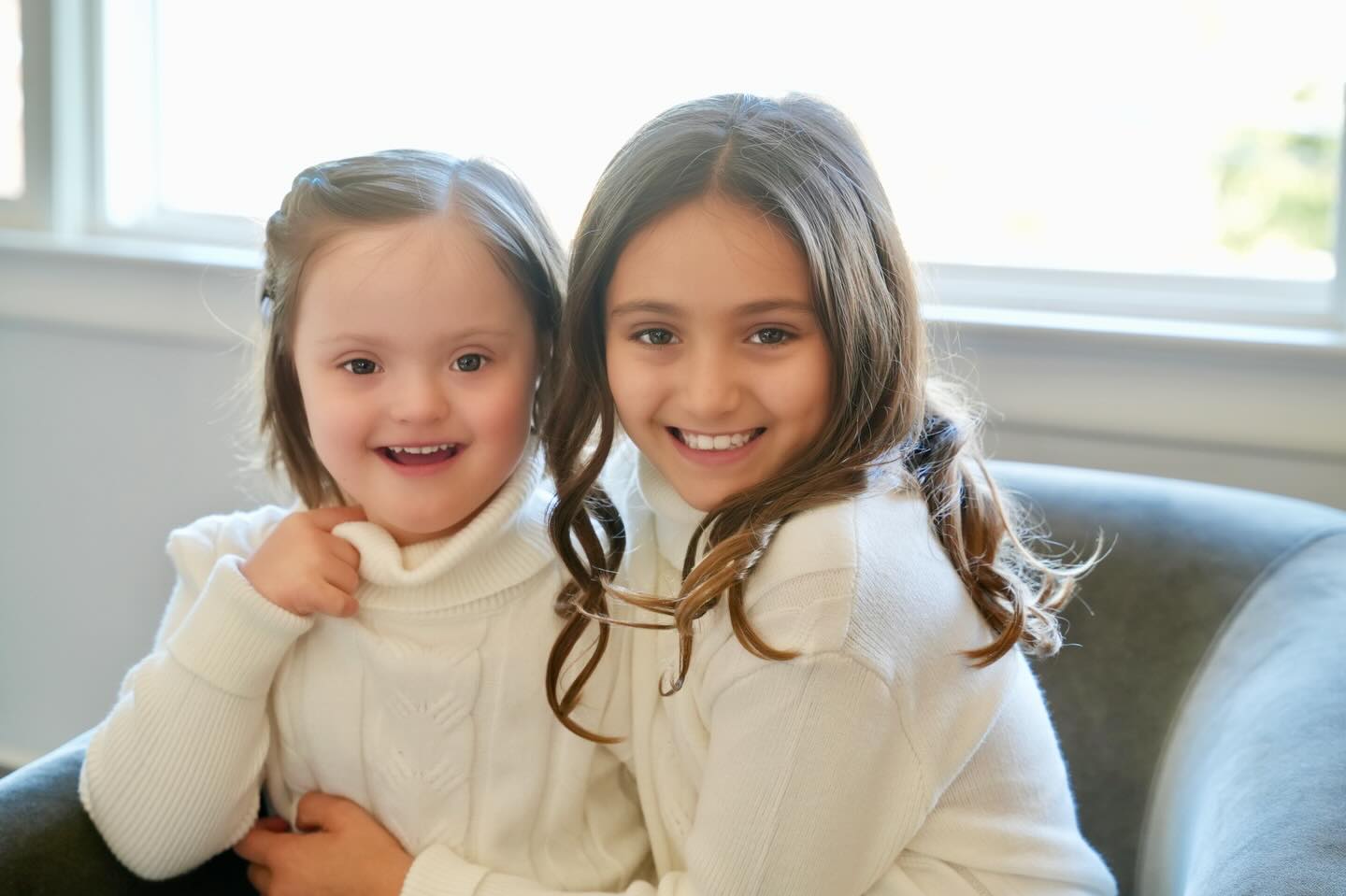
    Photo of siblings Addie and Charlee sitting together and smiling with joy.  This photo is symbolic of the spirit of National Siblings Day, which is about celebrating the bond between siblings and which is the focus of this blog post

    A Personal Reflection on National Siblings Day

    Today is National Siblings Day, a day dedicated to celebrating the unique and meaningful relationships between brothers and sisters.

    For those who may not know me, my name is Jess Quarello, and I serve as the Brand Communications Manager at Community Supports Network. Much of my work involves sharing stories, resources, and information that support individuals with disabilities and their families. But beyond my professional role, this work is also deeply personal to me.

    I’m the mom of two incredible girls—Charlee and Addie.

    Watching the relationship between my daughters grow has been one of the most meaningful experiences of my life. Like many siblings, they share laughter, imagination, and the countless small moments that make childhood so special. They play together, make up games, and occasionally argue over toys or whose turn it is to choose the movie. In many ways, their relationship looks just like that of any other pair of sisters.

    But their bond also carries a deeper layer of meaning for our family.

    My younger daughter, Addie, has Down syndrome. While that is certainly part of her story, it has never defined the love and connection she shares with Charlee. To Charlee, Addie is simply her little sister—someone she loves, protects, laughs with, and grows alongside every day.

    Growing up with a sibling with a disability can shape children in incredibly powerful ways. Siblings often develop empathy, patience, and resilience from a very young age. They learn that differences are simply part of the human experience and that everyone deserves respect, opportunity, and inclusion.

    As a parent, I often find myself observing Charlee and realizing that she is growing up with a perspective many people only gain later in life. She sees the world through a lens of compassion and understanding. She celebrates Addie’s accomplishments, supports her when things are challenging, and reminds me every day how naturally children can embrace inclusion when they grow up in an environment that values it.

    Siblings of individuals with disabilities often become some of the most important supporters and advocates in a person’s life. They grow up witnessing determination and resilience, celebrating milestones that others might overlook, and learning that success can take many different forms.

    Their role in a family’s journey is incredibly meaningful. While much of the focus in the disability community understandably centers around the individual receiving services, siblings are often quietly learning, growing, and contributing in ways that shape the entire family dynamic.

    Through my work at Community Supports Network, I see this every day. Behind each individual building skills, finding employment, gaining independence, or participating in their community, there is often a network of family members who have been part of that journey from the very beginning. Siblings, in particular, bring a unique kind of support—one built on shared experiences, lifelong connection, and unconditional love.

    For families navigating disability, these sibling relationships can be a powerful source of strength, understanding, and encouragement.

    Today, on National Siblings Day, I’m especially grateful for the bond that Charlee and Addie share. Their relationship reminds me daily that inclusion begins at home, in the small everyday moments that shape how we see and support one another.

    It’s a reminder that family connections—especially those between siblings—can play an incredibly meaningful role in helping individuals grow, thrive, and feel supported throughout their lives.

    To all the siblings who grow up alongside brothers and sisters with disabilities, thank you. Your compassion, patience, and advocacy help create a more understanding and inclusive world.

    Happy National Siblings Day.


    Jess Quarello
    Brand Communications Manager
    Community Supports Network

  • What Does a DDD Budget Actually Cover? A Simple Breakdown for Families in New Jersey

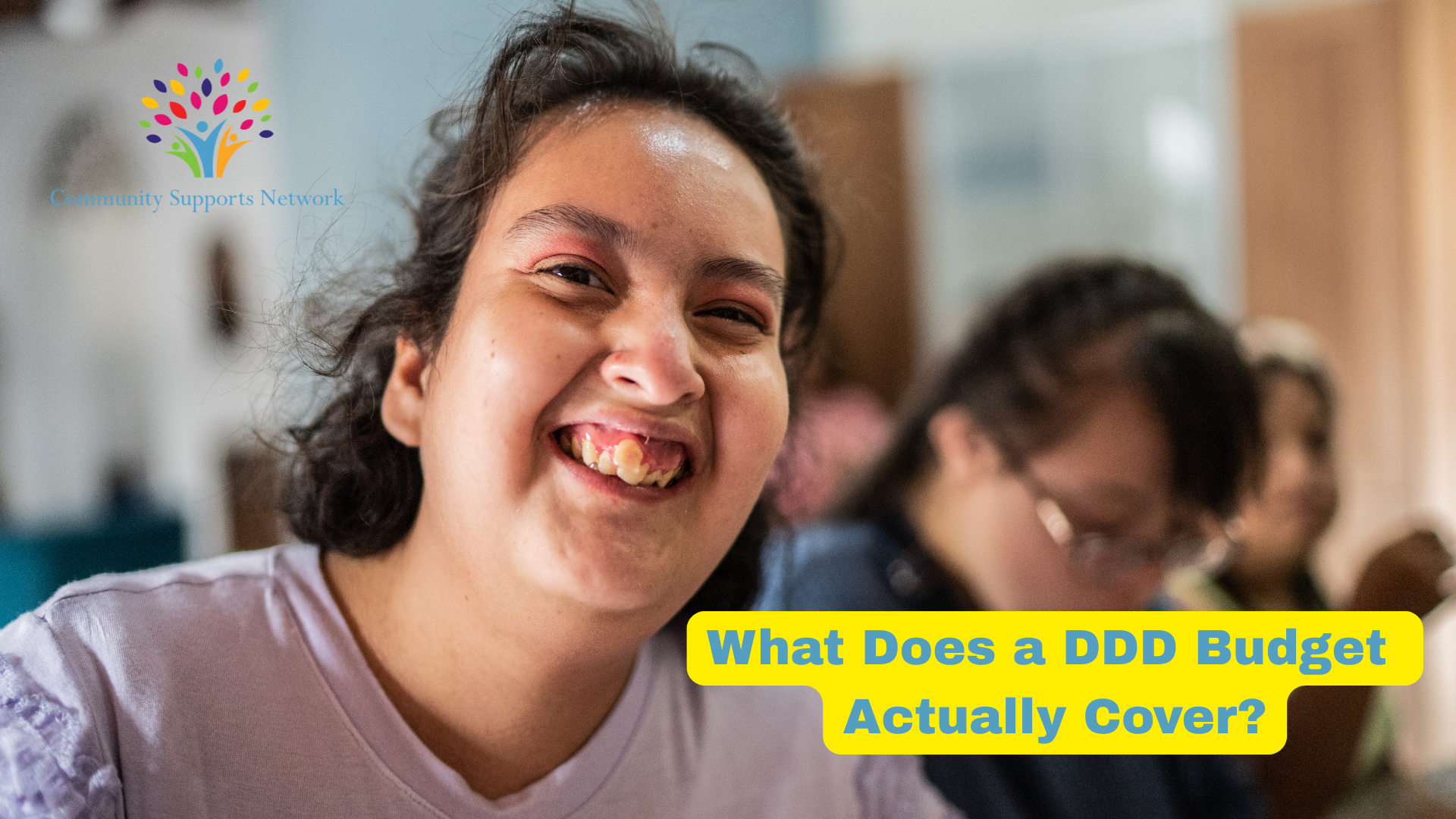
    Photo of a young autistic lady who is receiving services approved by the New Jersey DDD, with a caption that reads "what does a DDD budget actually cover?"

    If you’re navigating services for a loved one with a disability in New Jersey, you’ve likely heard the term “DDD budget.” But one of the most common questions families ask is:

    What can we actually use it for?

    The answer isn’t always clear—and understanding how to use your budget effectively can make a big difference in your loved one’s quality of life.

    At Community Supports Network (CSN), we work with families every day who are trying to better understand their options. This guide is meant to simplify what a DDD budget can cover and how it can be used in real, meaningful ways.


    What Is a DDD Budget in New Jersey?

    In New Jersey, the Division of Developmental Disabilities (DDD) provides funding through Medicaid to support eligible adults with Intellectual and developmental disabilities.

    Most individuals receive services through the Supports Program, which provides an annual budget based on assessed need. This funding is designed to be person-centered, meaning it can be used in ways that align with an individual’s unique goals, interests, and level of support.

    (For individuals with higher support needs, the Community Care Program (CCP) may provide access to additional services, including residential supports.)


    What Can a DDD Budget Be Used For?

    While services must be approved and aligned with an individual’s plan, DDD funding in NJ can support a wide range of services:


    1. Supported Employment

    DDD funding can support individuals in finding and maintaining meaningful employment, including:

    • Job coaching
    • On-the-job support: While DVRS is the first and preferred service provider for individuals seeking competitive, integrated employment, in certain cases individuals may use their personal DDD budgets.
    • Job development services

    These services help individuals build independence, gain confidence, and become active members of their communities.


    2. Community-Based Supports

    Funding can be used for supports that help individuals participate in their communities and build social and life skills.

    This may include:

    • Community outings
    • Recreational activities
    • Volunteer opportunities
    • Skill-building in real-life settings

    In some cases, DDD funding can also support participation in activities that promote health and well-being—such as gym memberships, classes, or structured programs—when tied to individual goals and approved in the service plan.


    3. Daily Living & Life Skills Supports

    Many services focus on building independence in everyday life, including:

    • Communication skills
    • Personal care routines
    • Time management
    • Household and daily living tasks

    These supports are essential for helping individuals live as independently as possible.


    4. Behavioral & Clinical Supports

    Depending on individual needs, DDD funding may also include:

    • Behavioral supports
    • Therapeutic services
    • Individualized plans to address specific challenges

    5. Transportation

    Transportation services may be available to help individuals access employment, programs, and community activities.


    6. Residential Supports (Through CCP)

    For individuals enrolled in the Community Care Program, funding may also support residential services, such as:

    • Community group homes
    • Supervised apartments
    • Supported living arrangements

    7. Residential Supports (Through CCP)

    For individuals enrolled in the Community Care Program, funding may also support residential services, such as:

    • Community group homes

    Supervised apartments


    8:  Education

    • Classes
    • College Courses
    • Vocational Programs

    Common Misconceptions

    Because the system can feel complex, there are a few common misunderstandings:

    • “It only covers basic care.”
      In reality, DDD services are designed to support independence, growth, and community inclusion—not just daily care.
    • “We can use it for anything.”
      Services must be approved, tied to assessed needs, and included in the Individualized Service Plan (ISP).
    • “We have to figure this out alone.”
      There are providers and support coordinators available to help guide families through the process.

    Making the Most of Your Budget

    Your loved one’s DDD budget is a tool—and how it’s used should reflect their goals, interests, and vision for their life.

    With the right supports in place, individuals can:

    • Build meaningful routines
    • Develop independence
    • Form social connections
    • Participate more fully in their communities

    We’re Here to Help

    Understanding your options is the first step—but you don’t have to navigate it alone.

    At CSN, we partner with families across New Jersey to help them make the most of their DDD services—whether that means exploring employment, building life skills, or increasing community involvement.

    If you’re curious about what may be possible within your DDD budget, we encourage you to reach out to us today.

  • How Families Can Advocate for Their Loved Ones with Disabilities

    Image of blue post-it notes with words like hope, love, accept, advocate, empower, teach, support, all of which are part of the topic for today's blog post about how families can advocate for their loved ones with disabilities.

    Advocacy plays a powerful role in improving the lives of individuals with disabilities. While large policy changes and national awareness campaigns often receive the spotlight, some of the most meaningful advocacy happens in everyday moments—when families speak up, ask questions, and work to ensure their loved ones have access to the opportunities and support they deserve.

    At Community Supports Network (CSN), we believe families are some of the most important advocates in the disability community. Whether advocating in schools, healthcare settings, workplaces, or local communities, families help create pathways for greater inclusion and understanding.

    What Advocacy Really Means

    Advocacy is simply the act of supporting and speaking up for the rights, needs, and well-being of an individual. For families of individuals with disabilities, advocacy can take many forms, including:

    • Ensuring appropriate educational supports and services
    • Promoting accessibility and inclusion in community spaces
    • Helping individuals access resources and support programs
    • Encouraging independence and self-advocacy skills

    Advocacy does not always mean confronting a problem. Often, it involves collaboration, communication, and education.

    Everyday Advocacy Makes a Difference

    Many families are already advocating for their loved ones in ways they may not even realize. Everyday advocacy can include:

    • Asking questions about services or supports
    • Sharing information with teachers, caregivers, or service providers
    • Encouraging inclusive opportunities in schools and community programs
    • Helping others better understand disability and inclusion

    These small actions help create environments where individuals with disabilities are respected, supported, and valued.

    Supporting Self-Advocacy

    One of the most powerful forms of advocacy is helping individuals learn to advocate for themselves. Self-advocacy allows individuals with disabilities to express their needs, preferences, and goals.

    Families can encourage self-advocacy by:

    • Involving individuals in decision-making
    • Encouraging them to express their opinions and preferences
    • Teaching them about their rights and available resources
    • Supporting opportunities to build independence

    Over time, these experiences help individuals gain confidence and strengthen their voice.

    Advocacy in the Community

    Advocacy also plays an important role in building more inclusive communities. Families can help raise awareness and promote inclusion by:

    • Participating in community events and advocacy initiatives
    • Supporting disability organizations and programs
    • Sharing personal stories and experiences
    • Encouraging businesses and organizations to adopt inclusive practices

    These efforts help create a culture where individuals with disabilities are welcomed and supported in every aspect of community life.

    How Community Supports Network Helps

    At Community Supports Network, we work alongside individuals and families to promote independence, opportunity, and inclusion. Through personalized services, community engagement, and dedicated support professionals, CSN helps individuals build the skills and confidence they need to thrive.

    Advocacy is not a single moment—it is an ongoing commitment to ensuring that individuals with disabilities have access to meaningful opportunities and a voice in their communities.

    When families, organizations, and communities work together, we can continue building a more inclusive future for everyone.

  • Honoring Black History Month: The Intersection of Race and Disability

    Black History Month invites us to reflect on the resilience, leadership, and contributions of Black individuals throughout history. It is also a time to acknowledge stories that have too often been overlooked — including the experiences of Black individuals with disabilities.

    The intersection of race and disability tells a powerful story about advocacy, inequity, resilience, and progress.

    At Community Supports Network (CSN), we believe honoring history means recognizing the barriers that existed — and continue to exist — while committing to equity in the services we provide today.

    A History of Overlooked Voices

    Historically, both racial discrimination and disability discrimination have shaped access to education, employment, healthcare, and community inclusion.

    Black individuals with disabilities have often faced compounded inequities:

    • Limited access to quality healthcare
    • Disproportionate placement in segregated education settings
    • Underdiagnosis or misdiagnosis of developmental disabilities
    • Reduced access to early intervention services
    • Barriers to culturally competent care

    For decades, disability advocacy movements and civil rights movements ran on parallel tracks — but the voices at the intersection were not always centered.

    And yet, Black leaders with disabilities have played powerful roles in shaping advocacy across both movements.

    Leaders Who Shaped Change

    Brad Lomax

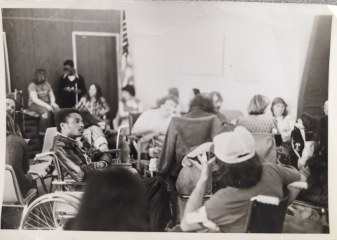
    Black and white photo of Brad Lomax with other activists at the history 504 Sit-in of 1977.

    A member of the Black Panther Party and a disability rights activist, Lomax played a critical role in the historic 504 Sit-In of 1977, which led to enforcement of Section 504 of the Rehabilitation Act — a foundational civil rights protection for individuals with disabilities.

    Johnnie Lacy

    Image of Johnnie Lacy in honor of black history month.

    A leader in the Independent Living Movement, Lacy advocated for accessible housing and services while highlighting racial inequities within disability systems.

    Lois Curtis

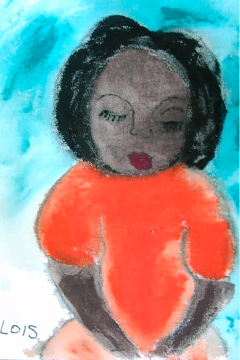
    Image of painting depicting Lois Curtis in honor of black history month.


    Curtis was one of the plaintiffs in the landmark Olmstead v. L.C. Supreme Court case, which affirmed the right of individuals with disabilities to live in community-based settings rather than institutions.

    These leaders remind us that disability rights are civil rights — and that advocacy is strongest when it is inclusive.

    Where We Are Today

    Progress has been made, but disparities remain.

    Research continues to show:

    • Black children are more likely to face disciplinary action in schools rather than receive appropriate disability supports.
    • Black adults with disabilities experience higher rates of unemployment.
    • Access to culturally responsive services remains inconsistent.

    Understanding this history helps inform better practices today.

    Moving Forward with Equity

    At CSN, equity is not a seasonal conversation — it is an ongoing commitment.

    Providing person-centered services means recognizing the full identity of the individual — including culture, race, community, and lived experience.

    It means:

    • Practicing cultural humility
    • Listening without assumptions
    • Building trust with families
    • Ensuring access to community-based, inclusive services
    • Continuing education for support professionals

    When we acknowledge the intersection of race and disability, we strengthen our ability to provide truly inclusive care.

    Black History Month reminds us that progress is built through awareness, advocacy, and action.

    And that honoring history requires us to continue the work.

  • October Advocacy Days: Shining a Light on Disability Awareness

    October advocacy days. Disability advocacy days.

    October is a month filled with opportunities to raise disability awareness, educate communities, and celebrate the incredible individuals and families we serve at Community Supports Network (CSN). Throughout the month, there are numerous observances dedicated to disabilities, health conditions, and inclusion — each one offering a chance to foster understanding and create positive change.

    At CSN, we believe advocacy is more than just awareness; it’s about taking action to ensure individuals with disabilities and their families feel supported, valued, and empowered.

    Month-Long Observances

    National Disability Employment Awareness Month (NDEAM)

    Established in 1945 and officially designated by Congress in 1988, NDEAM celebrates the many contributions of people with disabilities to the American workforce. It’s also a reminder of the importance of inclusive hiring practices and workplace accessibility.
    💡 How you can help:

    • Advocate for disability-inclusive hiring in your workplace.
    • Support businesses owned or operated by individuals with disabilities.

    Down Syndrome Awareness Month

    This month is dedicated to celebrating individuals with Down syndrome, raising awareness, and advocating for acceptance and opportunities. It’s a time to honor their talents, achievements, and the incredible value they bring to our communities.
    💛💙 How you can help:

    ADHD Awareness Month

    Focused on education and support for those living with Attention Deficit Hyperactivity Disorder (ADHD), this month encourages understanding of ADHD as a neurodevelopmental condition, not a character flaw.
    💡 How you can help:

    • Learn about ADHD-friendly strategies for work, school, and home.
    • Share resources with families navigating ADHD.

    Dyslexia Awareness Month

    Dyslexia affects how people read, write, and process language. This month promotes early intervention and understanding, helping children and adults reach their full potential through proper support.
    💡 How you can help:

    • Advocate for early screenings in schools.
    • Encourage schools to provide accessible learning tools and resources.

    Spina Bifida Awareness Month

    Spina bifida is a birth defect affecting the spine and spinal cord. This observance is dedicated to educating communities and sharing resources to improve quality of life for those living with the condition.
    💡 How you can help:

    • Share educational materials to raise awareness.
    • Support local organizations providing resources for families.

    Key Awareness Days

    • World Cerebral Palsy Day – October 6
      Celebrating individuals with cerebral palsy while promoting advocacy and inclusion worldwide.
    • World Mental Health Day – October 10
      Raising awareness about mental health and the importance of accessible, compassionate care for all.
    • World Sight Day – October 9th
      Highlighting the importance of eye health and access to vision care globally.
    • Blind Americans Equity Day (White Cane Safety Day) – October 15
      Recognizing the independence and mobility that white canes provide to individuals with blindness or low vision.
    • Invisible Disabilities Week – Mid-October (around October 19–25)
      A week dedicated to raising awareness about disabilities that aren’t immediately visible, like chronic illnesses or neurological conditions.

    Why These Days Matter:

    Each of these observances is more than just a date on the calendar — it’s an opportunity to:

    • Advocate for inclusion and accessibility.
    • Educate others about disabilities and health conditions.
    • Celebrate the achievements and contributions of individuals with disabilities.

    At CSN, we encourage everyone to take part in these important moments of awareness. Whether through sharing stories, attending local events, or simply having meaningful conversations, every action helps create a more inclusive world.

    Join the movement!

    This October, let’s come together to support individuals with disabilities and their families. By recognizing these observances, we can amplify voices, break down barriers, and make meaningful progress toward a future where everyone has the opportunity to thrive.

    💙 Together, we can turn awareness into action.

    Want to learn more? Head to www.yourcsn.com to connect!

    Written by Jessica Quarello, Brand Communications Manager

  • Connecting, Learning, and Growing at the DSDN Rockin’ Moms Retreat

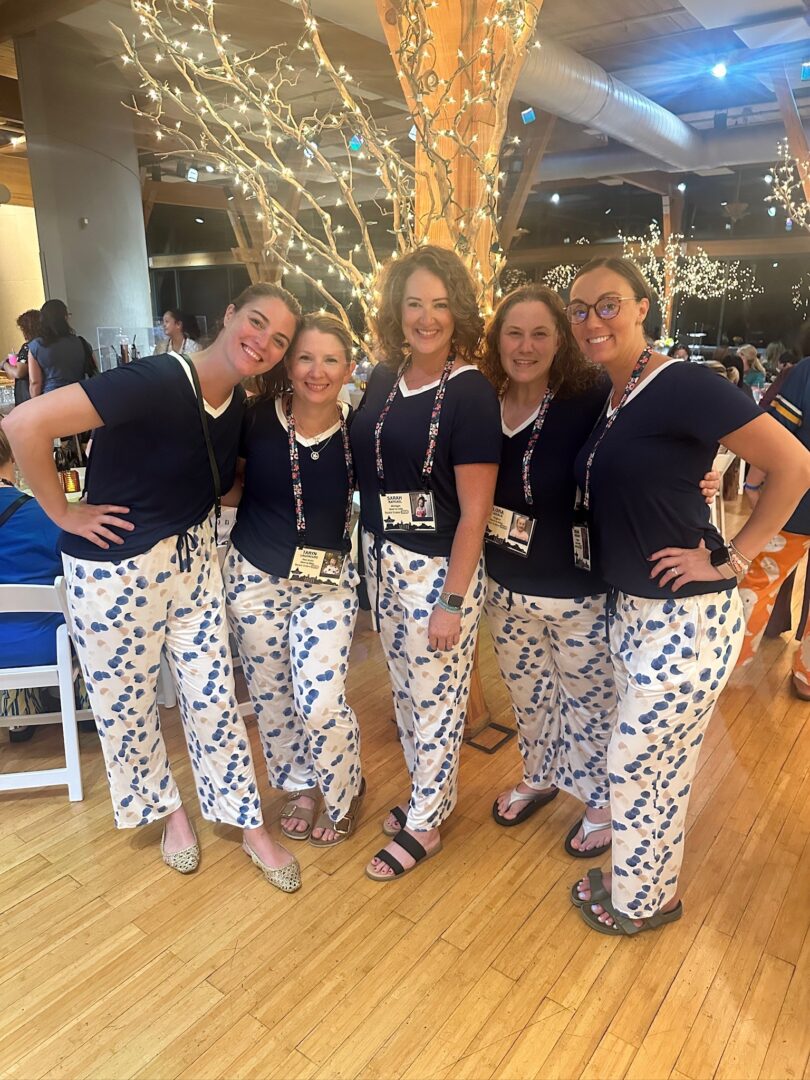
    Mothers of children with Down syndrome pose together at a Down syndrome retreat event.

    This past weekend, our Brand Communications Manager, Jess, had the incredible opportunity to travel to Pine Mountain, Georgia, to attend the Down Syndrome Diagnosis Network (DSDN) Rockin’ Moms™ Retreat — an event that brings together mothers of children with Down syndrome from across the country for connection, education, and renewal.

    The Rockin’ Moms Retreat is held in a different location each year, giving families a chance to explore new places while finding strength in a community that truly understands their journey. This year’s retreat was hosted at the beautiful Callaway Resort and Convention Center, a serene backdrop for a weekend filled with meaningful moments.

    The Mission Behind the Retreat

    The DSDN’s mission is simple yet powerful:

    “To connect, support, and provide accurate information to parents — and the medical professionals who serve them — from the time of diagnosis through age three, while fostering the opportunity for lifelong connections.”

    This retreat embodies that mission. It’s not just a weekend getaway — it’s a lifeline for moms, especially those navigating the early years of parenting a child with Down syndrome. By offering a safe space to share stories, ask questions, and learn from experts, DSDN helps families feel seen, supported, and empowered.

    Highlights From the Weekend

    The retreat kicked off on Friday with check-in and a warm welcome from DSDN staff and volunteers. Attendees received swag bags filled with thoughtful goodies, setting the tone for the weekend ahead.

    Saturday was filled with programming designed to educate and inspire. The day began with the Medical Roundtable, a highly anticipated session where updated research and findings are shared with parents. This annual tradition ensures families leave with the latest information and resources to support their children’s health and development.

    After an informative morning, attendees enjoyed lunch with a breathtaking view, offering time to connect and reflect. These informal conversations are often where the deepest bonds are formed — moms sharing their personal stories, victories, and challenges with others who truly “get it.”

    Why Events Like This Matter

    For many families, especially those in the early stages of navigating a Down syndrome diagnosis, attending events like the Rockin’ Moms Retreat can be transformative. They provide:

    • Connection: A reminder that no one has to walk this path alone.
    • Education: Access to reliable, up-to-date information about health, development, and advocacy.
    • Empowerment: Tools and confidence to navigate challenges and celebrate milestones.

    As someone deeply committed to building inclusive, supportive communities, I left this weekend feeling inspired and grateful. It was a powerful reminder of why the work we do at Community Supports Network (CSN) matters so deeply. Our mission — to provide individualized care and resources for individuals with disabilities and their families — aligns beautifully with the vision DSDN brings to life each year through this event.

    Looking Ahead

    Returning home, I carry with me not just memories of a wonderful weekend but also renewed motivation to continue advocating for families and creating spaces where everyone feels supported and valued.

    To all the incredible moms I met: thank you for sharing your stories and your strength. And to DSDN: thank you for the work you do every day to ensure that families everywhere have access to connection, knowledge, and hope.

    Together, we are building a future where individuals with Down syndrome — and all individuals with disabilities — can thrive with our help. 💙💛

    Written by Jessica Quarello, Brand Communications Manager

  • Breaking Down Barriers: How Disability Services Work in New Jersey (A Family Guide)

    Navigating supports in New Jersey can feel like alphabet soup—NJEIS, CSOC, DDD, HCBS, NJCAT. Here’s a clear, step-by-step map of who to call, when to apply, and what to expect—from birth through adulthood.


    Birth–Age 3: Early Intervention (NJEIS)

    If you’re concerned about a child’s development before age 3, start with the New Jersey Early Intervention System (NJEIS). It’s the statewide program (run by NJ Department of Health) that evaluates and provides services for infants and toddlers with delays or disabilities. Families can self-refer; services typically end at the child’s third birthday.

    For children 3 and older, referrals typically shift to the local school district; families can also use Project Child Find (800-322-8174).


    Up to Age 21: Children’s System of Care (CSOC) / PerformCare

    For youth with intellectual/developmental disabilities (I/DD), mental health needs, or substance-use challenges, New Jersey’s Children’s System of Care (CSOC) is the public front door.
    PerformCare is the 24/7 single point of access for eligibility and service coordination under CSOC:
    📞 1-877-652-7624
    🌐 www.performcarenj.org


    Planning the Transition to Adulthood (Around 18–21)

    You can apply to the Division of Developmental Disabilities (DDD) at age 18, but DDD’s adult services start at 21 (while school-based services can continue through 21). Families should begin transition planning with the school IEP team and explore DDD eligibility well before the 21st birthday so services can start smoothly.
    Learn more: DDD Eligibility


    Age 21+: Division of Developmental Disabilities (DDD)

    DDD administers New Jersey’s Home and Community-Based Services (HCBS) for adults with I/DD via two Medicaid waiver programs:

    • Supports Program (SP): for adults living with family or independently in the community.
    • Community Care Program (CCP): includes options for licensed residential settings with additional clinical criteria.
      📘 Supports Program Manual

    Key Requirements & Steps

    1. Medicaid eligibility
      You must have NJ FamilyCare Medicaid to receive ongoing DDD services.
      NJ FamilyCare Info
    2. NJCAT assessment
      DDD uses the New Jersey Comprehensive Assessment Tool (NJCAT) to measure support needs in self-care, behavioral, and medical areas.
      NJCAT Overview
    3. Budgets by tier
      Your NJCAT score determines your tier and annual budget in the Supports Program.
      Budget Tier Table – Effective Jan 1, 2024
    4. Choose a Support Coordination Agency (SCA)
      Once eligible/enrolled, adults select a Support Coordination Agency. Support Coordinators help develop the Individualized Service Plan (ISP), locate providers, and make changes as needs evolve.
      Search for SCAs and Providers

    Self-Directed Options

    New Jersey offers Self-Directed Employee (SDE) models where individuals can hire their own staff and purchase certain approved services.
    Two models are available:

    • Vendor Fiscal/Employer Agent (VF/EA)
    • Agency With Choice (AWC)

    As of 2025, DDD is transitioning the VF/EA fiscal intermediary from PPL to Acumen, with staggered rollout through September 2025. Your Support Coordinator will guide you through model selection and enrollment.
    Self-Direction Resources


    How CSN Fits In

    • Navigation & planning: We help families prepare for key handoffs—Early Intervention → CSOC/PerformCare → DDD—so services don’t lapse.
    • Support Coordination: Once an adult enrolls with DDD, we work with support coordinators to provide this service that matches their NJCAT-based budget.
    • Self-direction support: We assist with setting up and maintaining self-directed services for long-term success.

    Quick Contacts (New Jersey)


  • What We Celebrate in September: Awareness, Inclusion, and Advocacy

    At Community Supports Network (CSN), we believe that every month offers an opportunity to amplify awareness, foster inclusion, and advocate for the rights and dignity of individuals with disabilities. September is especially meaningful, as it highlights several important observances that connect directly to our mission of empowering independence and building community.

    World Patient Safety Day — September 17

    This day emphasizes safer healthcare practices and the importance of reducing harm to patients. For people with disabilities, access to safe, responsive, and inclusive healthcare is essential. At CSN, we recognize the unique needs of the individuals we support and advocate for care systems that prioritize safety, dignity, and respect.

    World Alzheimer’s Day — September 21

    Alzheimer’s disease and other forms of dementia impact millions of families worldwide. On this day, we come together to raise awareness, support research, and stand by individuals and caregivers who navigate the challenges of memory loss. At CSN, we know that dignity in care is vital and that communities are stronger when we uplift one another.

    International Day of Sign Languages — September 23

    Language is power, and sign language is an essential tool for connection and inclusion. This day reminds us that communication should never be a barrier. We celebrate the richness of sign languages and the Deaf community, and we remain committed to fostering environments where every voice—spoken, signed, or supported—is heard and valued.

    National Non-Speaking/Nonverbal Awareness Day — September 30

    Not all communication looks the same. This observance advocates for individuals who are non-speaking or nonverbal, ensuring their voices are acknowledged and respected through alternative and augmentative communication methods. At CSN, we see daily how technology, creativity, and compassion help people express themselves fully.

    Limb Girdle Muscular Dystrophy Awareness Day — September 30

    Awareness of rare conditions, such as limb girdle muscular dystrophy, is vital for advancing research, building understanding, and supporting affected individuals and their families. By learning and sharing, we help strengthen communities and expand networks of care.


    Why These Days Matter

    Each of these observances shines a light on a different aspect of health, disability, and inclusion. For CSN, they are not just dates on the calendar — they are reminders of why we do what we do. Every day, we work to create environments where individuals feel empowered, supported, and able to live fulfilling lives.

    As we move through September, let’s carry forward the message that awareness leads to action, and action leads to change. Together, we can continue building communities that celebrate diversity, honor dignity, and prioritize inclusion.

    Written by Jess Quarello, Brand Communications Manager

  • Building Independence, One Step at a Time: The Impact of DSPs in Our Communities

    At Community Supports Network (CSN), our mission has always been clear: to provide the guidance, support, and encouragement that empower individuals with intellectual and developmental disabilities (I/DD) to live as independently and fully as possible.

    A cornerstone of that mission lies in the dedication and expertise of our Direct Support Professionals (DSPs) — the compassionate individuals who work every day to turn independence from a goal into a reality.

    Why Independence Matters

    For individuals with I/DD, independence looks different for everyone. It may mean learning how to prepare a favorite meal, managing personal schedules, or making choices about daily routines. These small but significant steps create confidence, foster self-reliance, and open the door to fuller participation in community life.

    The Role of a DSP in Daily Living Skills

    Our DSPs are more than caregivers — they are coaches, advocates, and partners in growth. Whether it’s encouraging choice-making, practicing new skills one step at a time, or introducing tools like visual schedules, DSPs help bridge the gap between support and self-sufficiency.

    The best part? Every achievement, no matter how small, is celebrated. Because progress isn’t measured only by milestones, but by moments of empowerment.

    Tip Tuesday: Learning from the Experts

    This month, we’ve launched our Tip Tuesday series, gathering advice directly from our DSPs on different aspects of daily living. Each week, we’ll highlight a new theme — from household management to social skills — sharing practical tips and strategies that families, caregivers, and advocates can use to support independence at home and in the community.

    A Community Effort

    While DSPs are on the frontlines, independence is nurtured through collaboration — between individuals, families, and our team. Together, we can create environments that promote choice, encourage growth, and celebrate individuality.

    At CSN, we are proud to be part of each person’s journey toward living a life filled with dignity, self-determination, and joy.


    💬 Follow along with our Tip Tuesday series and share your own strategies in the comments. Together, we can keep building a more inclusive, empowered community.

    ⮚ Interested in a career as a DSP? Check out our DSP jobs page for more information!

Serving Morris, Passaic, Bergen, Essex, Hudson, Union, Warren, Somerset, Hunterdon & Sussex Counties