
Tag: one step at a time

  • How Families Can Advocate for Their Loved Ones with Disabilities

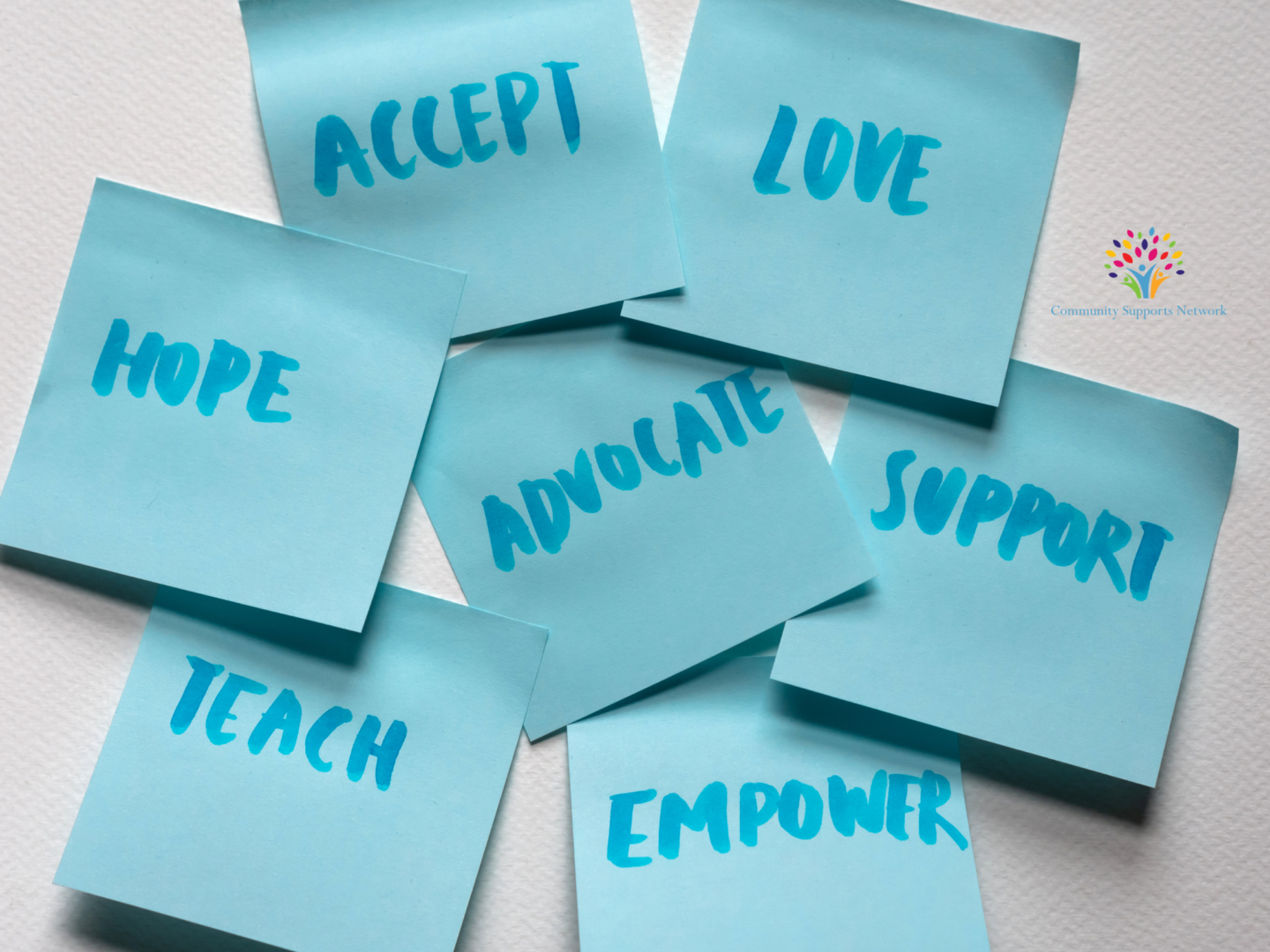
    Image of blue post-it notes with words like hope, love, accept, advocate, empower, teach, support, all of which are part of the topic for today's blog post about how families can advocate for their loved ones with disabilities.

    Advocacy plays a powerful role in improving the lives of individuals with disabilities. While large policy changes and national awareness campaigns often receive the spotlight, some of the most meaningful advocacy happens in everyday moments—when families speak up, ask questions, and work to ensure their loved ones have access to the opportunities and support they deserve.

    At Community Supports Network (CSN), we believe families are some of the most important advocates in the disability community. Whether advocating in schools, healthcare settings, workplaces, or local communities, families help create pathways for greater inclusion and understanding.

    What Advocacy Really Means

    Advocacy is simply the act of supporting and speaking up for the rights, needs, and well-being of an individual. For families of individuals with disabilities, advocacy can take many forms, including:

    • Ensuring appropriate educational supports and services
    • Promoting accessibility and inclusion in community spaces
    • Helping individuals access resources and support programs
    • Encouraging independence and self-advocacy skills

    Advocacy does not always mean confronting a problem. Often, it involves collaboration, communication, and education.

    Everyday Advocacy Makes a Difference

    Many families are already advocating for their loved ones in ways they may not even realize. Everyday advocacy can include:

    • Asking questions about services or supports
    • Sharing information with teachers, caregivers, or service providers
    • Encouraging inclusive opportunities in schools and community programs
    • Helping others better understand disability and inclusion

    These small actions help create environments where individuals with disabilities are respected, supported, and valued.

    Supporting Self-Advocacy

    One of the most powerful forms of advocacy is helping individuals learn to advocate for themselves. Self-advocacy allows individuals with disabilities to express their needs, preferences, and goals.

    Families can encourage self-advocacy by:

    • Involving individuals in decision-making
    • Encouraging them to express their opinions and preferences
    • Teaching them about their rights and available resources
    • Supporting opportunities to build independence

    Over time, these experiences help individuals gain confidence and strengthen their voice.

    Advocacy in the Community

    Advocacy also plays an important role in building more inclusive communities. Families can help raise awareness and promote inclusion by:

    • Participating in community events and advocacy initiatives
    • Supporting disability organizations and programs
    • Sharing personal stories and experiences
    • Encouraging businesses and organizations to adopt inclusive practices

    These efforts help create a culture where individuals with disabilities are welcomed and supported in every aspect of community life.

    How Community Supports Network Helps

    At Community Supports Network, we work alongside individuals and families to promote independence, opportunity, and inclusion. Through personalized services, community engagement, and dedicated support professionals, CSN helps individuals build the skills and confidence they need to thrive.

    Advocacy is not a single moment—it is an ongoing commitment to ensuring that individuals with disabilities have access to meaningful opportunities and a voice in their communities.

    When families, organizations, and communities work together, we can continue building a more inclusive future for everyone.

  • Advocacy in Action: Disability Awareness Days in March

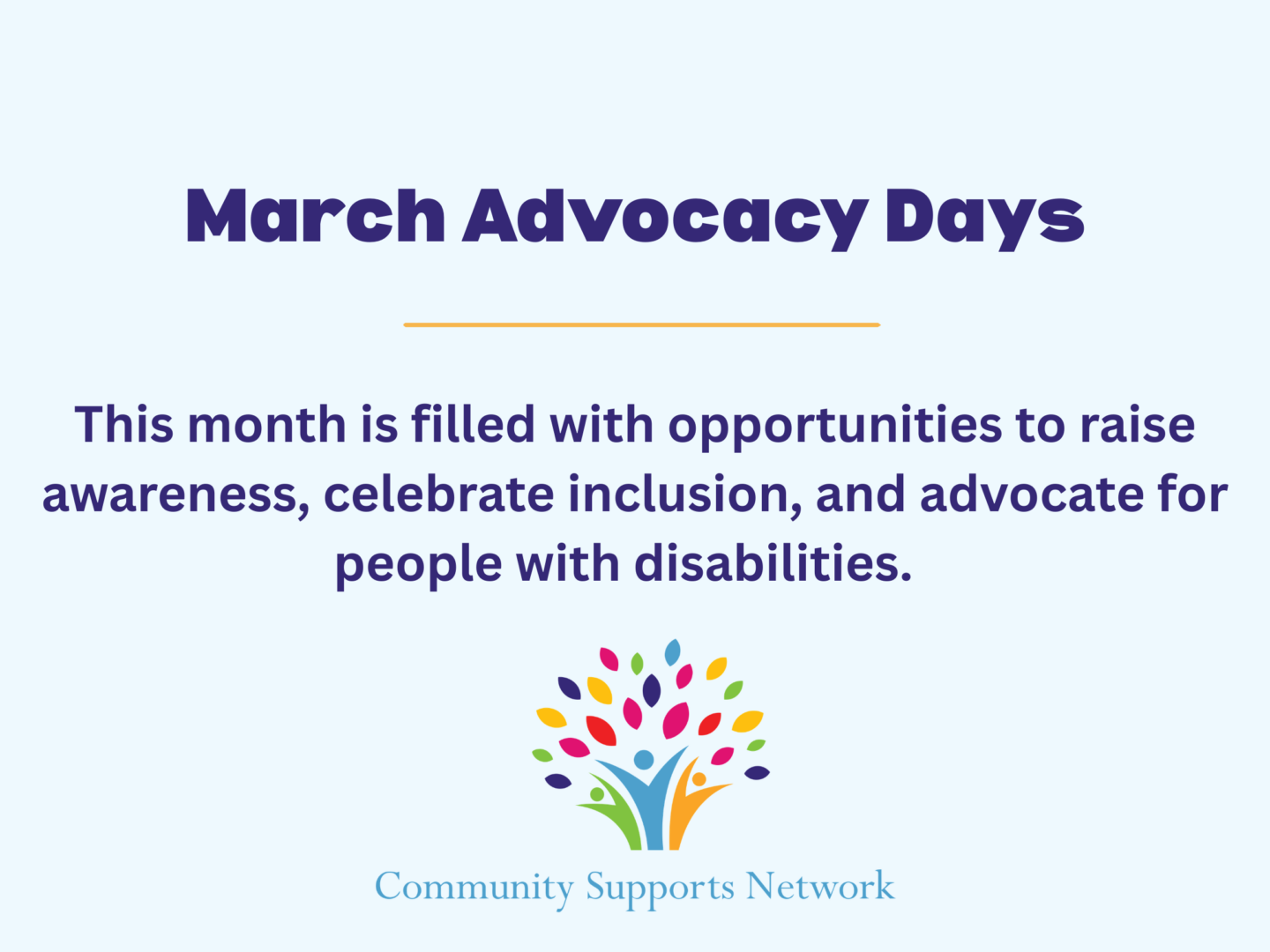
    Image with headline of March Advocacy Days, with subtext describing the month of March being filled with opportunities to raise awareness and celebrate inclusion and advocating for people with disabilities. Our company logo is at the bottom with our name, Community Supports Network, below it.

    How to Get Involved

    Advocacy plays a critical role in advancing inclusion, accessibility, and opportunity for individuals with disabilities. While advocacy happens year-round, certain moments throughout the year help shine a brighter spotlight on the issues, achievements, and voices within the disability community.

    March is one of those months.

    With several important advocacy days and awareness campaigns, March offers an opportunity to learn, celebrate progress, and take meaningful steps toward more inclusive communities.

    At Community Supports Network (CSN), we believe awareness is most powerful when it leads to action. Throughout the month, these advocacy observances remind us that individuals, families, professionals, and community partners all play a role in building a more inclusive world.

    Developmental Disabilities Awareness Month

    Each March, Developmental Disabilities Awareness Month highlights the importance of inclusion and the many contributions individuals with developmental disabilities make to their communities.

    The month was first recognized in 1987, when President Ronald Reagan called for greater awareness and understanding of the abilities and potential of people with developmental disabilities. Since then, however, the focus has expanded beyond awareness alone to emphasize something even more important: meaningful inclusion.

    Today, Developmental Disabilities Awareness Month encourages communities to recognize that individuals with developmental disabilities are not defined by limitations. Instead, they are employees, neighbors, friends, leaders, and advocates who contribute to their communities in meaningful ways.

    For organizations like CSN, this month reinforces the importance of person-centered services that empower individuals to pursue independence, employment, and community involvement.

    World Down Syndrome Day — March 21

    World Down Syndrome Day is celebrated globally on March 21. The date (3/21) represents the triplication of the 21st chromosome, which causes Down syndrome.

    On this day, individuals and organizations around the world raise awareness, promote inclusion, and advocate for equal opportunities for people with Down syndrome.

    For example, one of the most recognizable traditions associated with World Down Syndrome Day is the “Lots of Socks” campaign. People wear bright or mismatched socks to spark conversations about acceptance and inclusion.

    Beyond symbolic gestures, the day also highlights the importance of access to education, employment opportunities, healthcare, and community participation for individuals with Down syndrome.

    National Cerebral Palsy Awareness Day — March 25

    National Cerebral Palsy Awareness Day takes place on March 25 and aims to increase visibility and understanding of cerebral palsy, the most common motor disability in childhood.

    This day encourages education about the experiences of individuals with cerebral palsy. In addition, it promotes advocacy for improved accessibility, services, and resources.

    While every individual’s experience with cerebral palsy is unique, advocacy efforts focus on ensuring people with CP have equitable opportunities to participate in education, employment, recreation, and community life.

    As awareness grows, communities can work toward creating environments where accessibility and inclusion are the standard rather than the exception.

    International Women’s Day — March 8

    International Women’s Day, observed on March 8, celebrates the achievements and leadership of women around the world. In addition, it highlights ongoing efforts to advance equity and opportunity across communities.

    Within the disability community, this day also provides an opportunity to recognize the experiences and contributions of women with disabilities. At the same time, it acknowledges the many women who play vital roles in disability services as advocates, caregivers, support professionals, and leaders.

    Furthermore, recognizing these contributions helps bring attention to important issues such as accessibility, healthcare equity, employment opportunities, and representation for women with disabilities.

    Finally, International Women’s Day also offers a moment to celebrate the countless women working in disability services who dedicate their careers to supporting independence, dignity, and community inclusion.

    Turning Awareness Into Action

    Awareness days are important. However, their true value comes from the conversations and actions they inspire.

    Advocacy does not only happen at the policy level. Instead, it can take place in everyday moments — in classrooms, workplaces, neighborhoods, and communities.

    There are many ways individuals and organizations can get involved:

    • Learn more about disability rights and inclusion
    • Attend or support local advocacy events
    • Share stories and educational resources
    • Encourage inclusive hiring practices in workplaces
    • Support organizations that promote accessibility
    • Amplify the voices of individuals with disabilities

    Even small actions can create meaningful change.

    CSN’s Commitment to Advocacy and Inclusion

    At Community Supports Network, advocacy is woven into the work we do every day. Through person-centered supports, employment services, and community-based programs, our goal is to empower individuals with disabilities to live meaningful, self-directed lives.

    Ultimately, the advocacy days throughout March serve as a reminder that inclusion is not a one-time initiative. Rather, it is an ongoing commitment.

    By continuing to learn, listen, and advocate together, we can help create communities where individuals of all abilities have the opportunity to thrive.

  • How to Show Support That Feels Like Care (Not a Task)

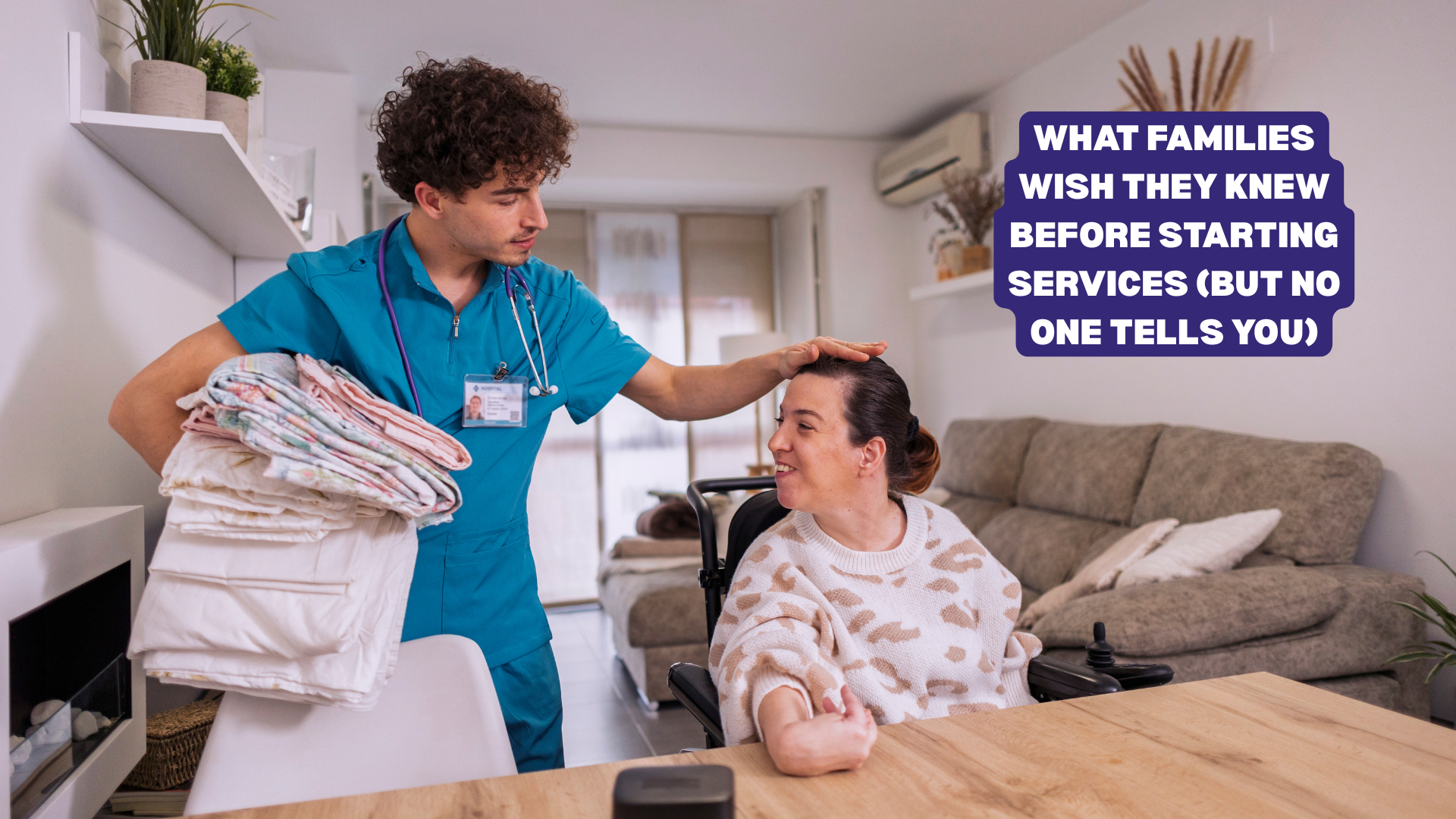
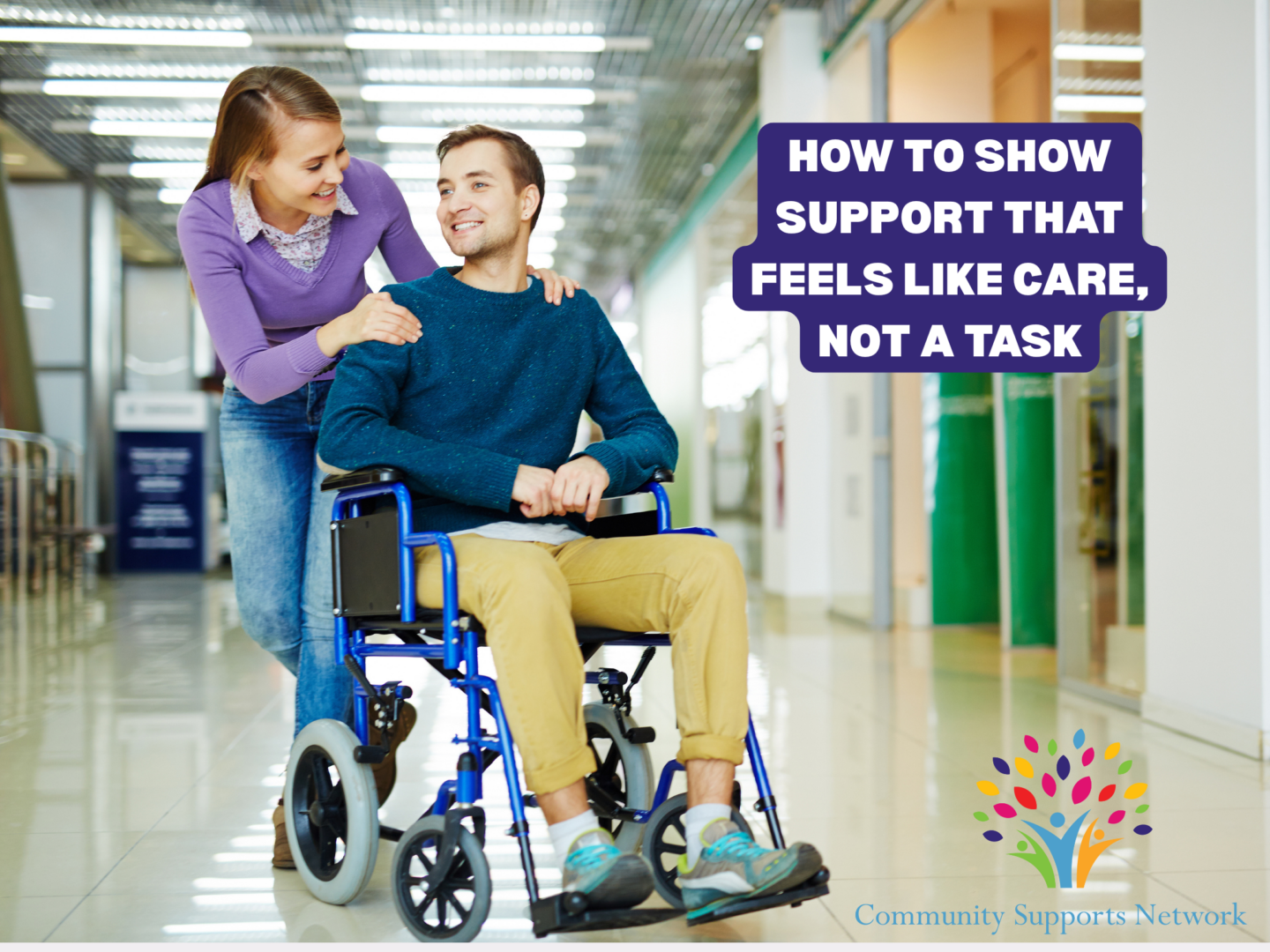
    Image of a Direct Support Professional with a disabled client, showing him support that feels like care, instead of a task.  This is love in action.  The image includes our CSN company logo in the bottom right corner.

    February often centers around love — but in disability support, love doesn’t show up as grand gestures or big moments.

    It shows up as care.

    Care is patient.
    Care is consistent.
    Care is person-centered.

    This Tip Tuesday, we’re focusing on simple ways to make support feel more human, more respectful, and more connected — especially during the colder, slower winter months.

    Tip #1: Lead With Warmth, Not Rush

    Winter routines can feel heavier. Mornings are darker. Energy is lower. Transitions may take more time.

    Support that feels like care starts with slowing down:

    • Give extra time for transitions
    • Use calm, reassuring language
    • Check in before moving on to the next task

    Warmth isn’t about doing more — it’s about being present.

    Tip #2: Personalize Support in Small Ways

    Feeling known is a form of care.

    That might look like:

    • Remembering how someone likes their coffee
    • Playing their favorite music during a routine
    • Asking about something they care about — and listening

    These small moments reinforce dignity and belonging.

    Tip #3: Choose Connection Over Control

    When days feel long or routines feel repetitive, it can be tempting to focus on “getting through the day.”

    Instead, look for moments to connect:

    • Share a laugh
    • Pause for a conversation
    • Follow the individual’s lead when possible

    Connection builds trust — and trust makes support more effective.

    Tip #4: Respect Emotional Needs (Not Just Physical Ones)

    February can be emotionally heavy for many people. Cold weather, shorter days, and changes in routine can affect mood and motivation.

    Person-centered support means:

    • Acknowledging emotions without dismissing them
    • Allowing space for off days
    • Offering support without pressure

    Care includes emotional safety.

    Tip #5: End the Day With Dignity

    How support ends matters just as much as how it begins.

    Before wrapping up:

    • Check in: “How did today feel for you?”
    • Offer reassurance for what’s coming next
    • Thank the individual for trusting you with their day

    Respect leaves a lasting impression.

    Why This Matters

    In disability support, love isn’t loud.

    It’s consistent.
    It’s respectful.
    It’s built in everyday moments.

    This February, let’s remember that support rooted in care, trust, and connection is what truly makes a difference.

    💙 Takeaway: When support feels like care, people feel valued — not managed.

  • The Importance of Trust in Disability Support Relationships

    Photo of a DSP with his client, with the words of "the importance of trust in disability support relationships" in bold font.

    At the heart of effective disability support is one essential element: trust.

    Trust is what allows individuals to feel safe, heard, and respected. It’s what turns support from a service into a relationship — and what makes growth, independence, and connection possible over time.

    At Community Supports Network, we see every day how trust shapes outcomes for individuals, families, and Direct Support Professionals alike. Without trust, support feels transactional. With trust, it becomes empowering.

    Trust Creates a Sense of Safety

    For many individuals with disabilities, the world can feel unpredictable or overwhelming. Changes in routine, unfamiliar environments, or new people can create anxiety and stress.

    Trust helps reduce that uncertainty.

    When individuals know that the people supporting them are consistent, respectful, and reliable, their nervous systems can relax. Feeling safe allows individuals to engage more fully in daily life — whether that’s trying a new activity, expressing a preference, or navigating the community.

    Safety isn’t just physical. It’s emotional. And trust is what builds it.

    Trust Is Built in Everyday Moments

    Trust isn’t created through big gestures. It’s built quietly, through consistency and follow-through.

    It looks like:

    • Showing up when you say you will
    • Listening without judgment
    • Respecting boundaries and preferences
    • Explaining changes instead of surprising someone
    • Following through on commitments

    These small, repeated actions send a powerful message: You matter. You can count on me.

    Over time, these moments add up to strong, meaningful relationships.

    Trust Supports Communication and Self-Advocacy

    When trust is present, communication becomes easier and more honest.

    Individuals are more likely to:

    • Express their needs and preferences
    • Ask for help when they need it
    • Share concerns or discomfort
    • Advocate for themselves

    Trust gives people confidence that their voice will be heard and respected. This is especially important for individuals who communicate in nontraditional ways or who have previously felt ignored or misunderstood.

    At CSN, we believe that supporting communication — in all its forms — is a key part of building trust and honoring self-determination.

    Trust Allows for Growth and Independence

    Growth requires vulnerability.

    Trying something new, making a decision, or taking on more responsibility can feel risky. Trust provides the foundation that makes those risks feel manageable.

    When individuals trust their support team, they are more willing to:

    • Practice new skills
    • Take healthy risks
    • Learn from mistakes
    • Build confidence over time

    Trust doesn’t eliminate challenges — but it makes navigating them feel safer and more supported.

    The Role of Direct Support Professionals

    Direct Support Professionals play a critical role in building and maintaining trust.

    DSPs are often among the most consistent people in an individual’s life outside of family. Their presence, attitude, and approach matter deeply. By leading with respect, patience, and empathy, DSPs help create relationships rooted in dignity and partnership.

    Trust grows when DSPs take the time to understand the individual — not just their support needs, but their personality, preferences, and goals.

    Trust Benefits Everyone

    It doesn’t just support individuals — trust strengthens families and teams as well.

    Families feel more confident when they trust the people supporting their loved ones. Teams work more effectively when communication is open and respectful. Services become more consistent, responsive, and person-centered.

    When trust is prioritized, everyone benefits.

    Building Trust Takes Time — and That’s Okay

    Trust isn’t instant. It develops over time through patience, consistency, and care.

    At Community Supports Network, we understand that strong relationships are built gradually. We prioritize stability, thoughtful communication, and person-centered practices because we know that trust is the foundation of meaningful support.

    When trust is present, individuals feel safer, more confident, and more empowered to live lives that reflect who they are — and who they want to be.


    EDITOR’S NOTE: Does trust matter to you in your job? Do you believe in the power of building trust when working? If so, you may wish to consider working as a DSP with us! For more information, please visit our careers page for current job openings.

  • What Makes a Great Direct Support Professional

    Photo of Direct Support Professionals with some of our special clients at a community sporting event, waving and smiling happily together

    Direct Support Professionals (DSPs) play one of the most important roles in community-based disability services — yet their impact is often misunderstood or overlooked.

    At Community Supports Network, we know that great DSPs do far more than provide assistance. They support independence, build trust, foster confidence, and help individuals live meaningful, self-directed lives. But what truly makes a great Direct Support Professional?

    It’s not just about tasks. It’s about people.

    1. Respect Comes First

    At the heart of great support is respect.

    Great DSPs recognize that every individual is the expert of their own life. They honor personal preferences, communication styles, cultural identities, and boundaries. Support is never about control — it’s about partnership.

    Respect shows up in everyday moments: listening before acting, asking instead of assuming, and treating individuals as adults with agency and dignity.

    2. Patience and Flexibility

    No two days look the same in disability support — and great DSPs understand that.

    Plans change. Emotions fluctuate. Progress isn’t always linear. Patience allows DSPs to meet individuals where they are, without rushing, judgment, or frustration. Flexibility allows them to adapt while keeping support consistent and safe.

    These qualities help create environments where individuals feel calm, supported, and understood.

    3. Strong Communication Skills

    Communication is about more than words.

    Great DSPs learn how each individual communicates — whether through speech, gestures, assistive technology, or behavior. They take time to understand what is being expressed and advocate when others may not be listening.

    They also communicate clearly with families, team members, and supervisors to ensure consistency, transparency, and continuity of care.

    4. Commitment to Person-Centered Support

    A great DSP understands that support should never be “one-size-fits-all.”

    Person-centered support means focusing on the individual’s goals, interests, strengths, and needs — not what is easiest or most convenient. It means supporting independence at the individual’s pace and offering guidance without taking over.

    This approach helps individuals build confidence, skills, and pride in their own accomplishments.

    5. Emotional Awareness and Empathy

    DSPs often support individuals through challenges, transitions, and big emotions.

    Great DSPs lead with empathy. They recognize that behavior is communication and that emotional responses often reflect unmet needs, stress, or change. By responding with compassion instead of correction, DSPs help individuals feel safe and supported.

    Empathy builds trust — and trust is the foundation of meaningful support.

    6. Reliability and Consistency

    Consistency matters.

    Showing up on time, following through on commitments, and maintaining routines help individuals feel secure. Great DSPs understand that reliability isn’t just professional — it’s personal. When someone knows they can count on you, confidence grows.

    This consistency is especially important for individuals who rely on structure to navigate their day.

    7. Willingness to Learn and Grow

    Great DSPs don’t need to know everything — but they are open to learning.

    They seek feedback, ask questions, participate in training, and reflect on their practice. They understand that growth benefits not only their own development but the quality of support they provide.

    At CSN, we believe investing in DSP growth strengthens everyone involved.

    More Than a Job

    Being a Direct Support Professional is more than a role — it’s a responsibility and a privilege.

    DSPs are mentors, advocates, problem-solvers, and community builders. They help turn inclusion into something individuals experience in real, everyday ways.

    At Community Supports Network, we are proud to work alongside DSPs who bring patience, respect, compassion, and commitment to their work each day. Their impact reaches far beyond the individuals they support — it strengthens families, communities, and the future of inclusive care.


    Does this sound like you — or someone you know? CSN is always looking for compassionate, dedicated individuals interested in making a difference as Direct Support Professionals. Learn more about joining our team here.

  • Why Direct Support Professionals Are Essential to Community Inclusion

    Photo of a client on the left side and Jess on the right, doing her magic as a DSP helping individuals gain independence every day.

    When people think about community inclusion, they often picture accessible buildings, inclusive classrooms, or employment opportunities. While those things matter deeply, there is another essential piece that makes true inclusion possible every day: Direct Support Professionals (DSPs).

    DSPs are the bridge between intention and reality. They help turn the idea of “belonging” into something individuals with disabilities can experience in meaningful, practical ways.

    At Community Supports Network (CSN), we see firsthand how DSPs shape lives, strengthen communities, and create opportunities that might otherwise remain out of reach.

    More Than Support — A Foundation for Independence

    DSPs do far more than assist with daily tasks. They support individuals in building skills, confidence, and autonomy.

    Through consistent, person-centered support, DSPs help individuals:

    • Navigate their communities
    • Learn daily living skills
    • Build routines
    • Make choices about their own lives
    • Set and pursue personal goals

    This support creates a foundation for independence — not dependency. It empowers individuals to participate in their communities on their own terms.

    Creating Access to Real Community Life

    Community inclusion isn’t just about being physically present. It’s about participation, relationships, and belonging.

    DSPs help make this possible by supporting individuals to:

    • Attend community events
    • Hold jobs
    • Volunteer
    • Join clubs or programs
    • Build friendships
    • Use public transportation
    • Advocate for themselves

    These experiences allow individuals to be seen not as “clients,” but as neighbors, coworkers, and community members.

    Building Confidence Through Trust and Connection

    For many individuals, a DSP is one of the most consistent people in their lives outside of family.

    That relationship matters.

    DSPs provide:

    • Emotional support
    • Encouragement during challenges
    • Stability during transitions
    • Recognition of progress and growth

    When someone believes in you, it becomes easier to believe in yourself. That confidence often becomes the catalyst for trying new things, taking healthy risks, and building a fuller life.

    Changing Perceptions One Interaction at a Time

    DSPs don’t just support individuals — they educate communities through everyday moments.

    Each interaction at a workplace, coffee shop, gym, or community event helps challenge stereotypes and reshape assumptions about disability.

    Inclusion becomes normal when people see:

    • Capability instead of limitation
    • Contribution instead of dependency
    • Personality instead of diagnosis

    DSPs play a quiet but powerful role in creating this shift.

    Supporting the Supporters

    The impact DSPs have is enormous — and so is the responsibility they carry.

    At CSN, we believe supporting DSPs is essential to supporting the individuals we serve. That means:

    • Ongoing training
    • Fair compensation
    • Emotional support
    • Opportunities for growth
    • A culture of respect and appreciation

    When DSPs are valued, individuals receive better support. Communities become stronger. Everyone benefits.

    A Role That Changes Lives

    Direct Support Professionals are not just part of the system of care.

    They are:

    • Mentors
    • Advocates
    • Teachers
    • Problem-solvers
    • Companions
    • Community builders

    Their work makes inclusion possible — not in theory, but in real life.

    At Community Supports Network, we are proud to work alongside DSPs who show up every day with patience, compassion, and commitment. Their impact reaches far beyond the individuals they support. It shapes families, neighborhoods, and the future of inclusive communities.

    EDITOR’S NOTE: Does this blog post describe your work ethic? Would you enjoy working as a DSP with us? If so, please check out this page: Our DSP job listings!

  • 2025 Highlights at a Glance

    Photo of our key team members, whose accomplishments are celebrated in this blog post.

    This year brought meaningful growth, new initiatives, and expanded opportunities across the

    Community Supports Network. Here are some of the key milestones that shaped 2025:

    Key Accomplishments by Our Team

    • Strengthened Brand Visibility & Community Awareness

    We increased our digital presence through consistent social storytelling, multimedia content, and strategic communication—helping families and partners connect with CSN more easily than ever.

    • Supported Independent Living & Housing Stability

    CSN provided assistance and resources to individuals working toward secure, supportive living arrangements—reinforcing our commitment to independence and dignity.

    • Showcased Inclusive Employment in the Community

    Through visits and partnerships with local businesses employing individuals with differing abilities, we highlighted real pathways to meaningful, inclusive work.

    • Relaunched the CSN Website With Major Growth in Reach

    In July 2025, CSN relaunched its website on a new WordPress platform, improving performance, accessibility, and user experience. Since then, traffic and engagement have increased significantly, with the site now drawing several times more visitors each month than the year prior.

    • Hosted a Multi-Agency Disability Services Vendor Expo

    Our large-scale expo brought together DDD, DVRS, and community providers—creating space for families to explore services, ask questions, and make critical connections.

    Photo of our team at the Morris County EXPO held at County College of Morris in Randolph NJ.
    • Engaged Families at Regional Transition & Empowerment Events

    We shared guidance on independent living, caregiving, and navigating the DDD eligibility process at transition fairs across New Jersey.

    • Held Multiple DDD Resource Fairs Across NJ

    We supported families by connecting them with employment supports, day programs, enrichment opportunities, and person-centered services.

    • Strengthened Family Navigation & Advocacy Support

    CSN assisted families in accessing therapies, employment services, disability specialists, and long-term planning resources to support meaningful daily living.

    • Launched New Multimedia Recruitment & Branding Assets

    New videos, ads, and branded content enhanced our hiring pipeline and expanded CSN’s visibility across the state.

    • Built Workforce Pipelines Through Education Partnerships

    We partnered with Bergen Community College for DSP certification and expanded outreach to high schools and universities to support future DSP careers.

    • Opened Our New CSN Training Center

    This dedicated space enhances staff development, onboarding, training and meaningful career growth, strengthening the quality of care across all programs.

    Celebrating the opening of our new training center!
    • Supported Community Partners Through Housing & Employment Initiatives

    CSN strengthened its commitment to community inclusion by donating funds to Circle Haven Housing to support adequate residential and independent living resources. We also partnered with Rising Above Bakery, a not-for-profit employing individuals with diverse support needs, and donated new tablets to help expand their capabilities and continue their meaningful work.

    • Expanded Access by Accepting Medical & Behavioral Cases

    CSN widened service availability for individuals with more complex needs—creating opportunities for families who previously had limited support options.

    • Increased Community-Based Skill Building & Group Activities

    We expanded group outings, recreation events, peer socialization, and community learning opportunities to support engagement and independence.

    • Deepened Relationships With Statewide Partners

    Collaboration with DDD, county colleges, and community organizations strengthened our role as a trusted, accessible resource for families.

    • CSN earned a Three-Year Accreditation from CARF International for Supported Employment Services

    This is the highest level of accreditation awarded by the leading global nonprofit accreditor of health and human services. Our team worked tirelessly on this project, and we are thrilled to have been awarded the honor.

    Together, these accomplishments and key milestones created a powerful foundation for everything we achieved this year. Below, we take a closer look at the events, initiatives, and stories that brought these highlights to life and strengthened our community in meaningful ways.

    Showing Up for the Community Through Events & Expos

    Throughout 2025, CSN hosted as well as attended numerous community expos, disability resource fairs, and local events across New Jersey, connecting with families, self-advocates, professionals, and partners. These events allowed us to share information about our programs, provide guidance, build relationships, and strengthen awareness of inclusive opportunities statewide. Each event reinforced our commitment to showing up, being accessible, and ensuring families feel supported.

    Spotlighting DSPs & Celebrating Their Impact

    Our Direct Support Professionals (DSPs) remain the heart of our organization, and this year we highlighted their dedication more than ever. Through staff features, interviews, and recognition posts, we shared the stories of DSPs who support daily living, foster independence, and build meaningful relationships every day. Their compassion and commitment continue to inspire our work.

    Sharing Family Stories & Lived Experiences

    We also elevated the voices and journeys of families across New Jersey. From transition stories to daily wins, each highlight reflected resilience, individuality, and the strength of community. These stories helped deepen understanding and celebrate the meaningful milestones—big and small—that shape everyday life.

    Launching the CSN Community Newsletter

    A major communications milestone this year was launching our CSN Community Newsletter—a monthly publication designed to keep families, DSPs, caregivers, and partners informed and supported. Each issue features disability policy updates, spotlights on inclusive NJ businesses, practical tips, person-centered strategies, and CSN news. The newsletter has quickly become a central resource for connection and information. If you haven’t already, make sure to join our mailing list!

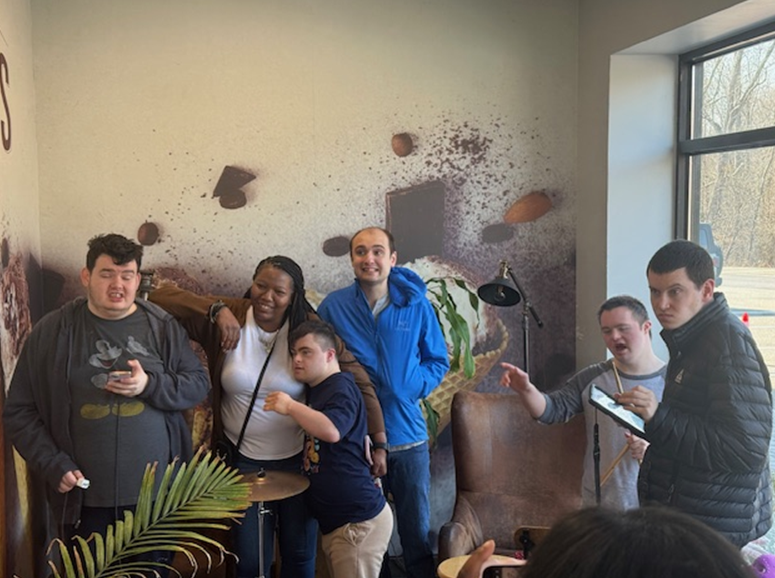
    Photo from one of the events we hosted.  Our team was able to engage in inclusive and fun activities like this for our clients with special needs throughout the year.

    Publishing Educational & Person-Centered Blog Posts

    We expanded our library of accessible blog posts covering a wide range of topics to support individuals, families, and care teams. These included sensory-friendly strategies, tips for staying socially connected, communication supports, skill-building opportunities, caregiver resources, tips on how to navigate getting services in NJ, and community-based learning ideas. Each post reflected our belief that meaningful learning can happen anywhere.

    Opening Our New Training Center

    One of our most exciting milestones this year was launching the CSN Training Center—a dedicated space designed to strengthen onboarding, skill development, and professional growth for our team. This investment reinforces our commitment to quality, excellence, and meaningful career pathways.

    Expanding Access by Accepting Medical & Behavioral Cases

    In 2025, we broadened our service capacity to support individuals with more complex medical and behavioral needs. This expansion opened new opportunities for families and strengthened our ability to serve individuals with diverse levels of support.

    Achieved A 3-Year CARF Accreditation for Supported Employment, Strengthening Our Commitment to Quality

    This year, CSN earned its CARF accreditation—an important recognition of our commitment to high-quality, person-centered services and organizational excellence. This achievement reflects the dedication of our staff, the strength of our programs, and our ongoing promise to deliver safe, supportive, and meaningful experiences for the individuals and families we serve.

    Looking Ahead to 2026

    2025 was a year of progress, connection, and shared impact—and the momentum is only growing. In 2026, CSN will continue to strengthen programs, enhance communication tools, expand resources for families and DSPs, uplift individual stories, promote person-centered planning, and build environments where everyone can learn, grow, and thrive.

    To every individual, family, DSP, staff member, and partner who made this year meaningful: thank you. Your resilience, collaboration, and trust inspire everything we do.

    From all of us at CSN,
    Wishing you a warm, connected, and inspiring start to the new year.
    Here’s to continued growth—together.

  • Tip Tuesday: Building Everyday Skills Through Community Activities

    Photo of several young adults sitting in a park talking about building everyday skills, with the title of this blog post in large yellow font over it.

    At Community Supports Network (CSN), we believe that learning doesn’t have to be confined to a classroom or a scheduled session. Some of the most meaningful skill-building happens out in the community—during everyday moments that naturally spark curiosity, confidence, and connection.

    Whether someone is grabbing groceries, visiting the park, or stopping for a cup of coffee, each outing offers opportunities to practice real-world skills in a supportive, engaging way. For DSPs, caregivers, and families, intentionally weaving learning into everyday environments can make growth feel fun, natural, and achievable.

    Building everyday skills can seem daunting for adults with disabilities, but it can be done quite easily by following our tips in this post. Below are a few simple but powerful ways everyday community activities can strengthen independence:


    🛒 1. Grocery Shopping → Sequencing, Budgeting & Decision-Making

    Walking through a grocery store can be a skill-building goldmine.

    Tips:

    • Create a short list together to practice planning and sequencing.
    • Compare prices to introduce budgeting and money management.
    • Encourage decision-making by offering two options (e.g., “apples or grapes?”).

    A simple grocery run becomes a chance to strengthen cognitive skills while promoting autonomy.


    🎲 2. Local Parks → Safety Awareness & Motor Development

    Parks offer open-ended opportunities to build confidence and independence.

    Tips:

    • Practice physical coordination on playground equipment.
    • Reinforce safety skills like staying within a designated area or following visual cues.
    • Explore nature to build observation and communication skills.

    These experiences help individuals feel more comfortable navigating different environments.


    📚 3. The Library → Communication, Literacy & Self-Advocacy

    Libraries are calm, structured environments perfect for gentle skill building.

    Tips:

    • Practice asking staff for help (“Where are the animal books?”).
    • Browse together to support personal interests and reading skills.
    • Use checkout kiosks to build independence with technology.

    Every visit empowers individuals to express their preferences and make choices.


    ☕ 4. Coffee Shops & Small Businesses → Social Interaction & Money Handling

    Local businesses offer ways to practice community engagement and social confidence.

    Tips:

    • Order a snack or drink to practice communication and polite exchanges.
    • Use cash or a card to build comfort with money handling.
    • Sit together and talk about the environment to build conversation skills.

    These small experiences increase confidence in public spaces.


    Why This Matters

    Community-based learning taps into:

    • Real-world problem-solving
    • Natural motivation
    • Confidence-building opportunities
    • Building everyday skills
    • Social and communication development
    • A stronger sense of belonging

    At CSN, we see every outing as a chance to help individuals live, learn, and thrive in the communities they love.

    With a little creativity and intention, everyday activities become incredible moments of growth.


    Ready to learn more?

    Explore how CSN supports independence, community engagement, and meaningful skill-building across New Jersey.
    Visit our blog for more tips, stories, and resources.

  • Building Independence One Step at a Time

    Why Breaking Down Tasks Matters in Disability Support

    Photo snapshot of the word "independent" from a dictionary definition explaining the meaning of that word in the English language.  In short it means that one is able to self-govern their actions.

    At Community Supports Network (CSN), we know that independence doesn’t happen all at once — it’s built one step, one choice, and one moment of trust at a time. This week, while preparing lunch with a client, we were reminded how important that approach truly is.

    The individual we were working with assumed we would handle the entire lunch preparation from start to finish, explaining that they don’t typically use the stove. It would have been easy — and faster — to simply step in and prepare everything ourselves. But that would have turned a support opportunity into a missed opportunity. Instead, we looked for moments within the task to build skills and confidence. Even though using the stove wasn’t appropriate for them right now, there were many other steps they could safely take part in. So we shifted our mindset from “doing it for them” to “doing it with them.”

    Here’s how we incorporated them into the process:
    ✅ They helped gather ingredients from the fridge and cabinets.
    ✅ We discussed each part of the recipe and what tools were needed.
    ✅ They stirred and mixed ingredients at the counter.
    ✅ We introduced basic kitchen safety concepts in real time.
    ✅ They plated the final meal and took ownership of the finished product.

    By the end, this wasn’t just “lunch someone made for me.” It became, “lunch I helped prepare.”

    How Breaking Down Tasks Helps Build Independence

    For many individuals with disabilities, being left out of tasks — even unintentionally — can reinforce the belief that they are dependent rather than capable. When we break down tasks into accessible pieces, we’re not simplifying the process — we’re strengthening it.

    Breaking a task into steps helps:
    ✅ Build confidence through achievable actions.
    ✅ Support skill development gradually over time.
    ✅ Reduce fear or anxiety around unfamiliar tasks.
    ✅ Show individuals that participation is possible, even if full independence isn’t there yet.
    ✅ Encourage pride, ownership, and self-worth.

    It’s a common misconception that being “independent” means doing everything entirely alone. In reality, independence often begins with supported participation. Even being involved in one step can open the door to stronger engagement the next time. This eventually leads to greater independence over time. When a person realizes, “I can do this part,” it shifts the narrative from limitation to possibility.

    As DSPs, caregivers, and support professionals, our role isn’t to rush to finish a task — we use that task as a bridge toward growth. That often means slowing down, asking “Where can I include them here?” and celebrating progress at every level. At CSN, we believe that success is not measured by whether someone completes an entire task alone. We see success when they gain confidence, learn something new, or feel empowered to try again.

    Next time we approach a daily task with someone we support, we can ask ourselves:

    “Am I doing this for them — or with them?”
    “Is there a step here they can safely try?”
    “How can we turn this routine moment into a chance to build independence?”

    Whether someone stirs ingredients, chooses a topping, or sets the table, these moments are not small. They are stepping stones toward confidence, self-reliance, and pride in their abilities.

    At CSN, we don’t just finish tasks — we build futures, one step at a time.

    Share your story with us or tag CSN on social media to inspire others in our community!

    Together, we can continue empowering individuals to discover what’s possible — one step at a time. Visit www.yourcsn.com to learn more!

  • Celebrating National DSP Recognition Week: Honoring the Heart of Community Supports Network

    Our DSP with one of our clients celebrating together on a sunny day.

    September 7–13th, 2025 marks National Direct Support Professional (DSP) Recognition Week — a time to shine a well-deserved spotlight on the extraordinary individuals who dedicate their lives to empowering others. At Community Supports Network (CSN), our DSPs are not just team members. They are advocates, mentors, and everyday heroes who make a profound difference in the lives of the people and families we serve.


    What Is a DSP and Why They Matter

    Direct Support Professionals are the backbone of disability services. They work directly with individuals who have intellectual and developmental disabilities (I/DD), autism, and other support needs. Their role goes far beyond providing care — they empower people to live full, independent, and meaningful lives.

    From teaching daily living skills to supporting someone as they achieve their dream job, DSPs are there every step of the way. They help bridge gaps in education, employment, social opportunities, and community inclusion.

    Simply put: DSPs don’t just support people — they help create brighter futures.

    At CSN, our DSPs support individuals through:

    • Job coaching to help people thrive in meaningful employment.
    • Life skills training for greater independence at home and in the community.
    • Advocacy and mentorship, ensuring every person’s voice is heard.
    • Joyful connections, fostering friendships and belonging.

    Why This Week Matters

    While the impact of DSPs is felt every single day, National DSP Recognition Week gives us a chance to collectively celebrate their dedication and elevate awareness of their crucial role. Across the country, DSPs are facing workforce shortages and systemic challenges. By celebrating their work publicly, we not only thank them but also advocate for greater recognition, better wages, and stronger support for these essential workers.

    For the individuals and families, they serve, DSPs aren’t just staff members — they are life changers. This week is an opportunity for communities to pause and say, “We see you, we value you, and we appreciate you.”


    A Look at DSP Impact at CSN

    At CSN, we see the magic of DSPs every day.

    Whether it’s supporting someone to land their first job, encouraging a person to reach a new milestone in independence, or simply being a trusted presence through life’s ups and downs, DSPs are central to our mission.

    One recent success story is [Insert Brief Example — e.g., a client who gained employment or reached a milestone thanks to a DSP’s support]. These moments are a testament to the powerful relationships built between DSPs and the people they serve.


    A Call to Action

    The work of DSPs is not just vital — it’s transformative. By recognizing and supporting them, we are investing in stronger, more inclusive communities.

    If you are a DSP, know this: you are seen, valued, and deeply appreciated.
    If you are a family member, friend, or community partner, take a moment to thank a DSP and consider how you can help advocate for these essential professionals.


    From All of Us at CSN: Thank You

    To every Direct Support Professional at CSN and beyond:
    Thank you for your compassion, your dedication, and the countless ways you make a difference.

    You are the reason individuals with disabilities are empowered to dream bigger, achieve more, and live lives filled with independence and joy.

    Happy National DSP Recognition Week! 💙


Serving Morris, Passaic, Bergen, Essex, Hudson, Union, Warren, Somerset, Hunterdon & Sussex Counties