
What Families Need to Know
Written by Jessica Quarello, Brand Communications Manager
For many families in the disability community, accessibility isn’t just about convenience—it’s about safety.
Recently, I went through the process of renewing my daughter Adeline’s handicap placard. Because she is a minor, we are required to recertify every three years, which means revisiting paperwork, doctor’s forms, and the full application process regularly. (NJ.gov)

And it got me thinking—this is something so many families rely on, but not everyone fully understands.
Why This Matters
When most people think of handicap placards, they think of physical mobility limitations.
But for many individuals with disabilities, the need goes far beyond that.
Hi! My name is Jess and I am the Brand Communications Manager here at CSN. I also happen to have a five year old daughter with Down syndrome. For my daughter, Adeline, a placard is essential due to elopement—a safety concern that can make even a simple parking lot feel overwhelming or dangerous.
Having accessible parking:
- Reduces distance and risk
- Helps maintain supervision
- Creates a safer transition from car to destination
For families like ours, it’s not about convenience—it’s about preventing unsafe situations before they happen.
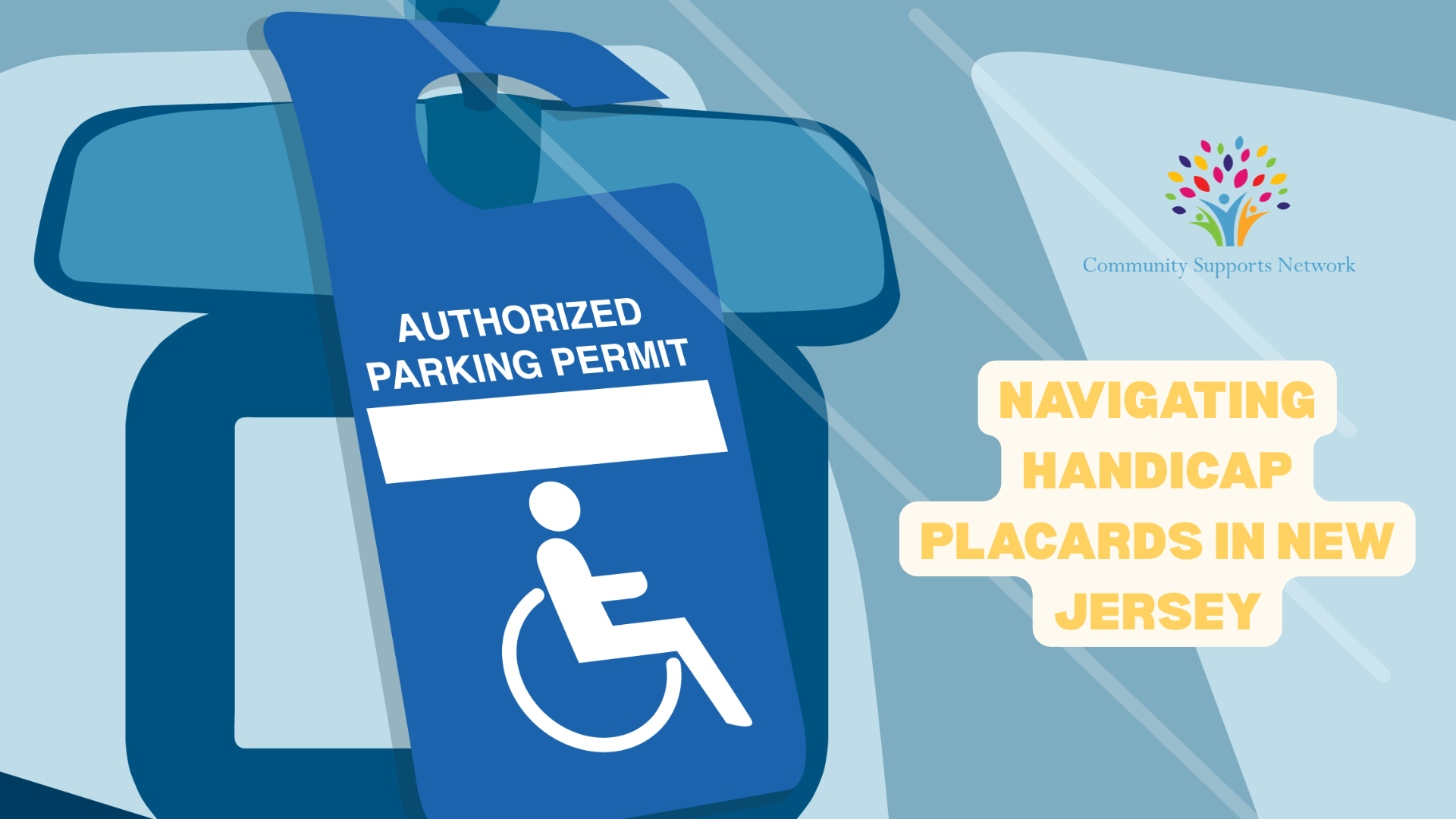
What Is a Handicap Placard in NJ?
In New Jersey, a Person with a Disability placard allows a vehicle carrying a qualified individual to park in designated accessible parking spaces.
There are two main types:
- Permanent placards (valid for 3 years)
- Temporary placards (valid for 6 months, with limited renewal) (ParkingMD)
Permanent placards are free, while temporary ones have a small fee. (YouTube)
Who Qualifies?
Eligibility is determined by a qualified medical professional, not just diagnosis alone.
In general, individuals may qualify if they:
- Have significant mobility limitations
- Cannot walk long distances safely
- Require assistance or supervision due to a condition
- Have neurological, developmental, or medical conditions that impact safe mobility
A physician, nurse practitioner, or other qualified provider must certify the need as part of the application. (NJ.gov)
For children especially, providers can consider safety risks, including behaviors like elopement, when determining eligibility.
How to Apply (New Jersey)
To apply for a placard or license plate, families must:
- Complete the Application for Vehicle License Plates and/or Placard (Form SP-41)
- Have a medical provider complete and sign the certification
- Submit the application:
- In person at an MVC agency, or
- By mail to the NJ MVC Special Plate Unit (NJ.gov)
If approved:
- You’ll receive a placard + ID card
- The placard can be used in any vehicle the individual is in
Renewal (What Most People Don’t Realize)
Even for permanent disabilities, New Jersey requires:
- Recertification every 3 years
- A new medical certification dated within 60 days of submission (NJ.gov)
There is no fee to renew, but the process essentially starts over each time. (NJ.gov)
For families with children, this often means:
- Scheduling doctor visits
- Completing paperwork repeatedly
- Navigating timing and deadlines
Placard vs. License Plate
Families can choose between:
- A placard (portable, usable in any car)
- A license plate (assigned to one vehicle)
Placards tend to be more flexible—especially for families who:
- Use multiple caregivers
- Travel in different vehicles
- Share transportation responsibilities
A Note for Families
If you’re a parent navigating this process, here’s what I’ll say:
If your child needs it—for safety, mobility, or access — you are not asking for too much.
You are advocating.
And while the process may feel repetitive or frustrating, these tools exist to support real needs.
Final Thoughts
Accessible parking is often seen as a small accommodation — but for many families, it’s a critical piece of independence, safety, and participation in everyday life.
At CSN, we believe in meeting individuals where they are — and that includes making sure families have access to the tools that help them safely navigate their communities.