Tag: supporting families with IDD

  • Why Paying Family Caregivers Matters

    A Closer Look at What’s at Stake

    Photo of the director of the U.S government division governing. health care, Robert F. Kennedy, whose recent statements are raising  concern in the mental health care community.  This is relevant in our blog post today about why paying family caregivers matters, because many caregivers must forego other paid employment to provide care for family members with disabilities or mental health conditions.

    Across the disability community, there has been growing conversation about Medicaid-funded services—specifically, programs that allow family members to serve as paid caregivers.

    Recently, national attention has been drawn to this model, with concerns raised about potential fraud and misuse within these programs. (disabilityscoop.com)

    And while accountability in any system is important, it’s equally important to understand the full picture—because for many families, this isn’t just a policy discussion. It’s their daily reality.


    What This Actually Looks Like for Families

    At Community Supports Network, we work closely with individuals and families navigating a wide range of needs.

    For many of the individuals we support, care is not simply about assistance—it’s about trust, familiarity, and safety.

    In some cases:

    • A child may only feel comfortable with a parent
    • An individual may rely on a sibling who understands their communication style
    • Changes in caregivers can lead to anxiety, behavioral challenges, or regression

    For these families, having a trusted caregiver isn’t a preference—it’s essential.


    When Caregiving Becomes a Full-Time Role

    What often goes unseen is the level of care required behind the scenes.

    Family caregivers are frequently responsible for:

    • Personal care (feeding, bathing, hygiene)
    • Medical needs and monitoring
    • Behavioral support
    • Transportation to therapies and appointments
    • Coordinating services, paperwork, and advocacy

    This is not occasional support—it is full-time, highly involved care.

    In many cases, parents or family members are forced to leave the workforce entirely to meet these needs.


    The Reality of the Caregiver System

    There is also a broader challenge that impacts this conversation:
    The current nationwide shortage of direct support professionals (DSPs).

    When families are approved for services, they often struggle to find consistent, reliable staff.

    As a result, family members frequently step in—not as a first choice, but as the only available option.

    Advocates emphasize that family caregivers are often “the only reliable option” due to workforce shortages and the complexity of care needs. (The Arc)
    Families would also do well not only to provide for their loved ones, but collaborating with agencies in the event they’re unable to fulfill the role the role of caregiver.


    Understanding the Fraud Concern – Without Losing Perspective

    It’s true that, like any large system, Medicaid programs must guard against fraud.

    But it’s equally important to separate:

    • Isolated cases of misuse, and
    • The legitimate, necessary support that millions of families rely on

    In fact, family caregivers provide an enormous amount of care—much of it unpaid—valued at over $1 trillion annually in the U.S. (disabilityscoop.com)

    This highlights a critical truth:
    Family caregiving is not an exception—it is a foundational part of how care is delivered.


    What Could Be at Risk

    If policies were to significantly restrict or eliminate the ability for family members to be paid caregivers, the impact could be far-reaching:

    1. Increased Financial Strain

    Families who already rely on a single income—or no income—could face additional hardship.

    2. Disruption in Care

    Individuals who depend on familiar caregivers may experience instability, stress, or setbacks.

    3. Greater Pressure on an Already-Strained Workforce

    With fewer family caregivers, demand for outside staff would increase in a system that is already understaffed.

    4. Risk of Institutionalization

    Without adequate in-home support, some families may be left with no choice but to seek more restrictive care settings.


    A Balanced Path Forward

    This conversation does not need to be political—it needs to be practical.

    We can hold two truths at once:

    • Oversight and accountability are important
    • And family caregivers play a vital, irreplaceable role in supporting individuals with disabilities

    The goal should not be to eliminate these supports, but to strengthen them responsibly—ensuring integrity while preserving access.


    Why This Matters

    At its core, this issue is about dignity, choice, and sustainability.

    People with disabilities deserve the ability to receive care:

    • In their homes
    • From people they trust
    • In a way that supports their independence and well-being

    And families deserve recognition and support for the essential role they play every day.


    Final Thought

    Behind every policy discussion are real people—families making impossible decisions, caregivers doing the work that keeps their loved ones safe, and individuals who simply want to live comfortably in their communities.

    As this conversation continues, it’s critical that those realities remain at the center.

  • 5 Simple Ways to Recharge While Supporting Others

    Self-Care Tips For Caregivers

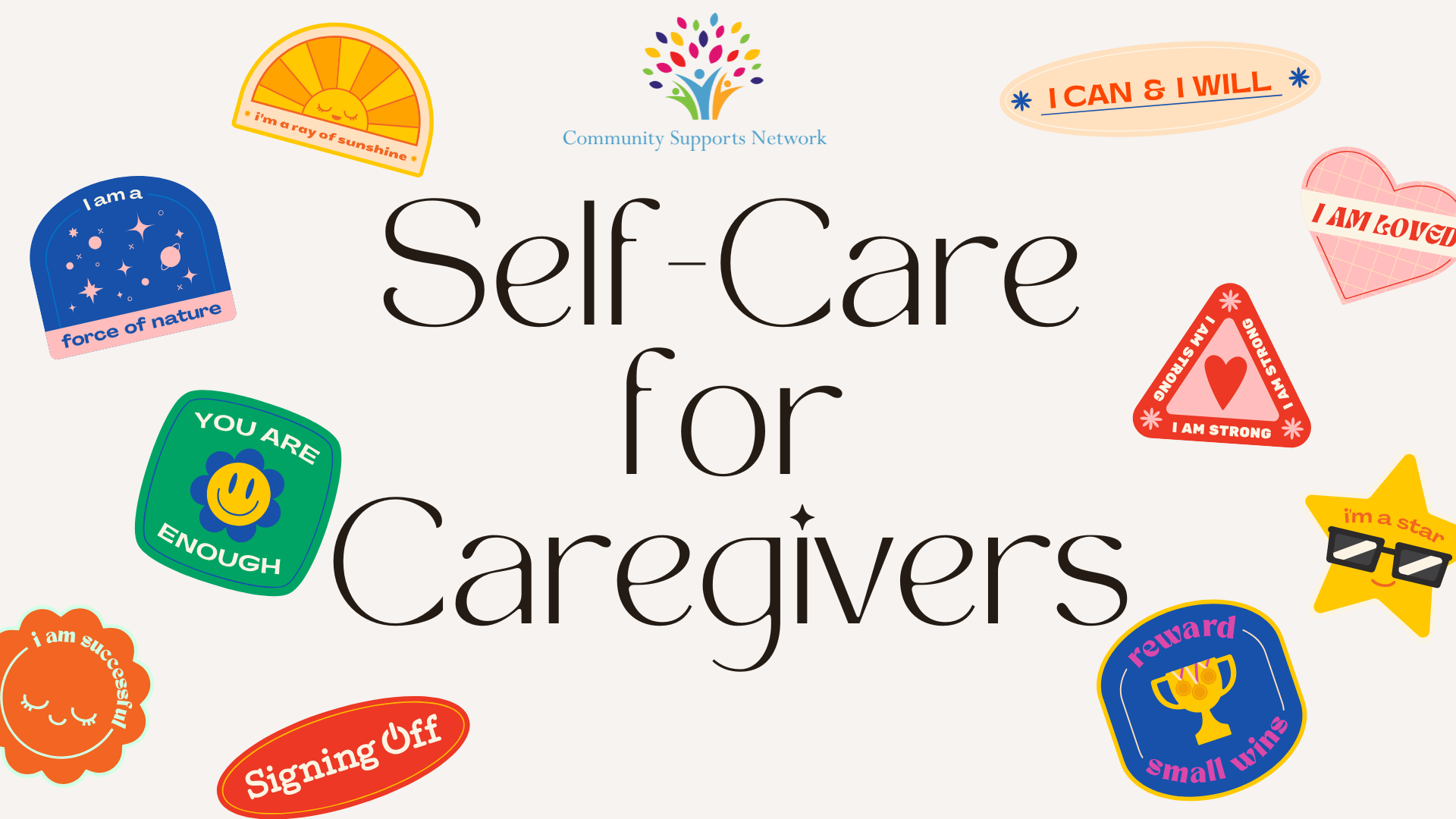
    Artful graphic with the words "self-care for caregivers" in the center, surrounded by colorful badges with words of positive encouragement in them.  These words are inspirational for those who support others for a living.

    Caring for a loved one with a disability is one of the most meaningful roles you can have — but it’s also one of the most demanding physically, emotionally and spiritually. Caregivers often pour so much of themselves into the needs of others that they forget to check in with their own well-being. Over time, this can lead to stress, exhaustion, or even burnout.

    At Community Supports Network (CSN), we know that self-care isn’t selfish — it’s essential. When caregivers take time to recharge, they can provide better, more consistent and intentional support for those who rely on them. Here are five simple, actionable ways to make self-care part of your routine.

    1. Give Yourself Permission to Rest

    Many caregivers feel guilty for taking a break, but rest is a non-negotiable part of health. Even a few minutes of quiet time with a cup of tea, a short nap, or reading a chapter of a book can restore your energy.

    Tip: Schedule and time block downtime on your calendar just like you would a doctor’s appointment — because it’s just as important.

    2. Build a Support Network

    No one should navigate the caregiving journey alone. Reach out to friends, family, or local support groups who understand what you’re going through. Sharing experiences and challenges can reduce feelings of isolation and provide valuable emotional support.

    Need ideas? Check out local disability organizations, online forums, or ask CSN staff about resources in your area.

    3. Move Your Body — Even in Small Way

    Physical activity can boost mood and reduce stress. You don’t need an intense workout — a 15-minute walk, stretching while watching TV, or even dancing around the kitchen counts!

    Remember: Movement is as much about releasing tension and stress as it is about fitness.

    4. Practice Mindfulness or Gratitude

    Caring for others can feel overwhelming, especially on tough days. Taking a few minutes to breathe deeply, meditate, or reflect on small wins can bring a sense of calm. Even jotting down three things you’re grateful for each night can shift your mindset in powerful ways.

    5. Ask for Help Without Guilt

    It’s okay — and necessary — to ask for help. Whether it’s requesting respite care, swapping duties with a friend, or leaning on professional services like those at CSN, support is available.

    You don’t have to do everything alone. Accepting help is a sign of strength, not weakness.

    The Bottom Line

    Caring for someone you love is a profound act of compassion, but you deserve care, too. By incorporating these small steps into your daily life, you’ll not only nurture your own well-being but also create a sustainable, healthy environment for the person you care for.

    If you’re looking for additional support or resources, CSN is here to help. Visit yourcsn.com to explore our services and learn how we can walk alongside you on your caregiving journey.

    Written by Jessica Quarello, Brand Communications Manager

  • Prioritizing Safety, Empowering Lives: Honoring World Patient Safety Day

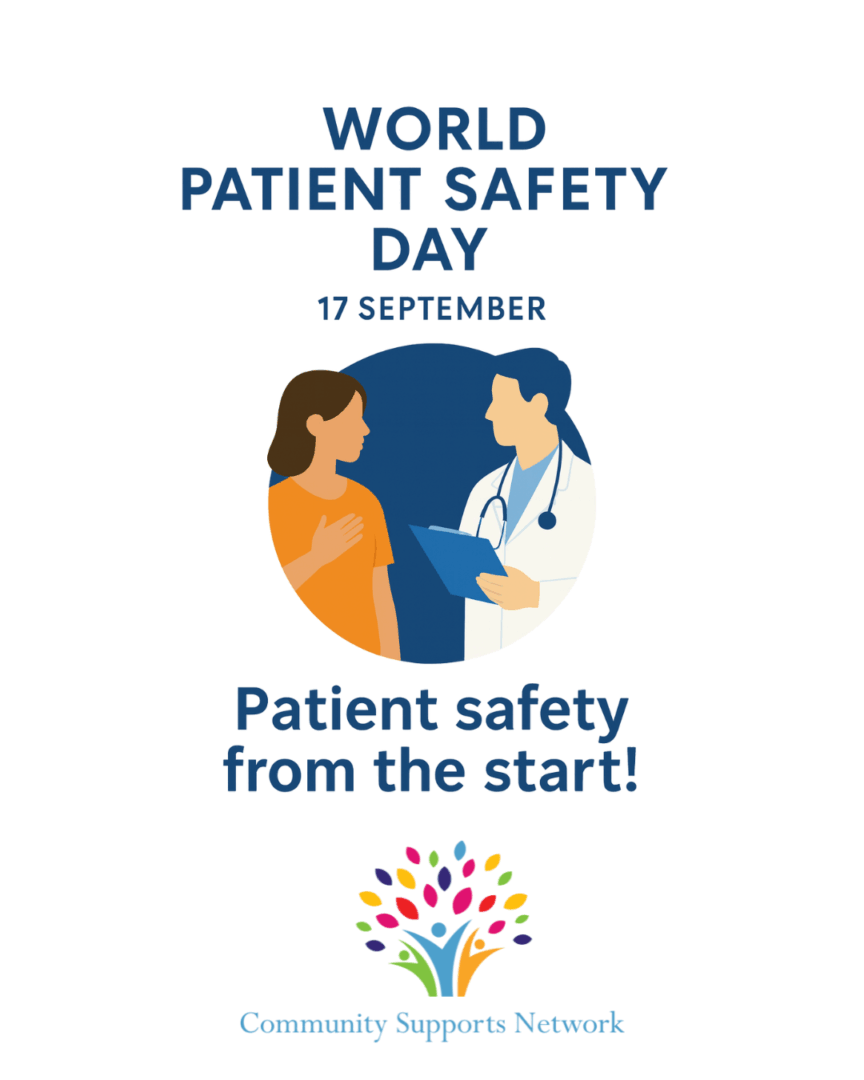
    Graphic art with the words "World Patient Safety Day" which occurs on September 17 every year, with this year's slogan "Patient safety from the start!"

    Each year, on September 17, organizations around the world come together to recognize World Patient Safety Day (WPSD) — a day dedicated to raising awareness about the importance of keeping healthcare safe for all. This year’s theme, Patient safety from the start!, reminds us that true safety and quality in care begin with listening to and empowering those we serve.

    At Community Supports Network (CSN), our mission is centered around providing individualized care for individuals with disabilities, ensuring that each person is not only supported but also protected in every aspect of their journey. Safety isn’t just a protocol we follow — it’s the foundation of the trust we build with the individuals and families who count on us every single day.

    Why Patient Safety Matters

    Patient safety extends far beyond the walls of hospitals. It includes:

    • Preventing harm in everyday care settings — from homes to community spaces.
    • Clear communication and advocacy, ensuring every individual’s needs and concerns are understood.
    • Training and supporting staff, so they have the knowledge and confidence to provide safe, high-quality care.
    • Empowering patients and families, giving them a voice in their care plans and decisions.

    When safety is prioritized, individuals are able to thrive, and families gain peace of mind knowing their loved ones are supported by a team that values both dignity and protection.

    CSN’s Commitment to Safety

    At CSN, we are proud of the measures we take to maintain a culture of safety:

    • Continuous staff training to prevent errors and promote best practices.
    • Open communication channels that encourage feedback from individuals, families, and our teams.
    • Personalized care plans that address unique needs and minimize risks.
    • Strong partnerships with families and the community, ensuring everyone is informed and involved.

    Elevating Voices, Building Trust

    World Patient Safety Day calls on all of us to listen to the voices of patients and their caregivers. When we truly hear their stories, concerns, and goals, we can deliver care that is not only safe but also compassionate and transformative.

    Today, we honor our Direct Support Professionals (DSPs) and the entire CSN team for their dedication to this mission. Your work ensures that safety remains a cornerstone of the lives we touch.


    Join Us in Making Safety a Priority

    As we observe World Patient Safety Day, let’s remember that safety is a shared responsibility. Whether you are a family member, caregiver, or advocate, your voice matters. Together, we can create a world where every individual receives care that is safe, respectful, and empowering.

Serving Morris, Passaic, Bergen, Essex, Hudson, Union, Warren, Somerset, Hunterdon & Sussex Counties