
In the world of disability services, the phrase “person-centered planning” is everywhere.
It appears in mission statements. It’s referenced in meetings. It shows up in documentation and training sessions.
But what does it really mean?
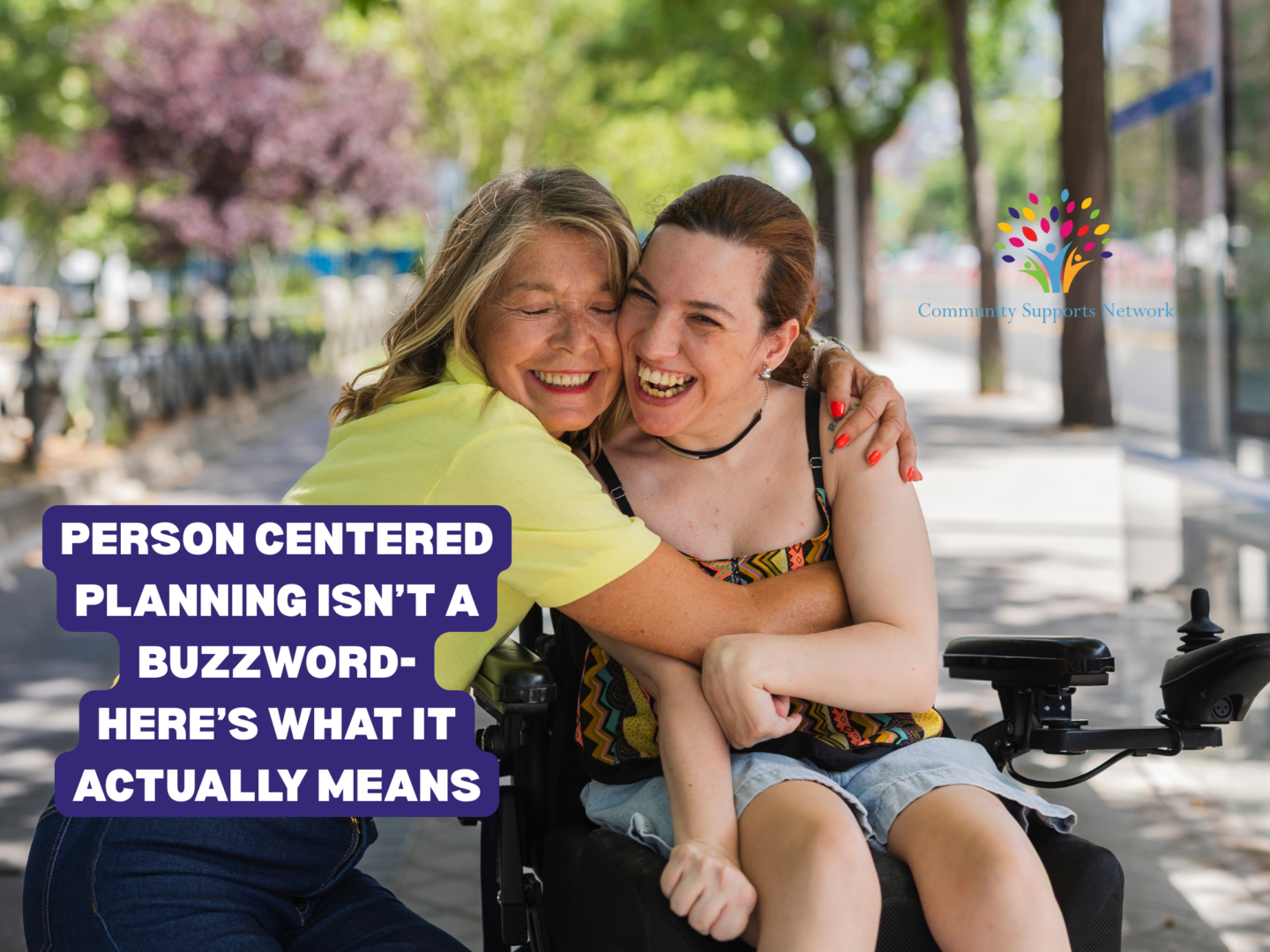
At Community Supports Network (CSN), person-centered planning isn’t a slogan. It’s the foundation of how we support individuals every single day.
Person-centered planning means the individual is not just included in decisions — they lead them.
It means support begins with listening.
Not assumptions. Not checklists. Not systems.
Listening.
What Person-Centered Planning Is
Person-centered planning is a collaborative process that focuses on an individual’s strengths, preferences, goals, and vision for their life.
It asks:
- What does a meaningful life look like to you?
- What are your goals — big or small?
- What environments help you thrive?
- What kind of support feels respectful and empowering?
Instead of designing services around what is available, person-centered planning designs services around what matters most to the individual.
It recognizes that:
- Independence looks different for everyone.
- Growth is not one-size-fits-all.
- Dignity is non-negotiable.
The person is not a diagnosis. They are not a service plan. They are not a list of needs.
They are a whole human being with preferences, dreams, relationships, and the right to direct their own life.
What Person-Centered Planning Is Not
It’s not completing paperwork and calling it a plan.
It’s not deciding what’s “best” without meaningful input.
It’s not focusing only on limitations.
And it’s not creating goals based solely on what fits neatly into a program structure.
True person-centered planning requires flexibility, creativity, and partnership. It sometimes requires slowing down. It requires humility. It requires trust.
Most importantly, it requires believing that the person receiving services is the expert in their own life.
What It Looks Like in Action
Person-centered planning shows up in small, everyday moments.
- It looks like honoring someone’s preferred communication style.
- It looks like adjusting routines to match energy levels.
- It looks like building employment goals around genuine interests — not convenience.
- It looks like supporting friendships and community involvement that feel authentic, not forced.
- It looks like asking before acting.
- It looks like celebrating progress that matters to the individual — even if it’s invisible to others.
At CSN, this philosophy guides how we approach supported employment, community-based services, and day-to-day support. Our role is not to control outcomes — it is to support individuals in building lives that feel meaningful to them.
Why It Matters
When planning is truly person-centered, outcomes improve.
Confidence grows.
Trust strengthens.
Independence expands.
Individuals feel seen — not managed.
Families feel heard — not dismissed.
Support professionals feel purposeful — not transactional.
Person-centered planning isn’t about perfection. It’s about partnership.
It’s about recognizing that every person deserves the opportunity to define success on their own terms.
And it’s about building services that honor that right.
At CSN, person-centered isn’t just what we say.
It’s how we show up.