Tag: language and inclusion

  • Language Matters: Understanding Person-First and Identity-First Language

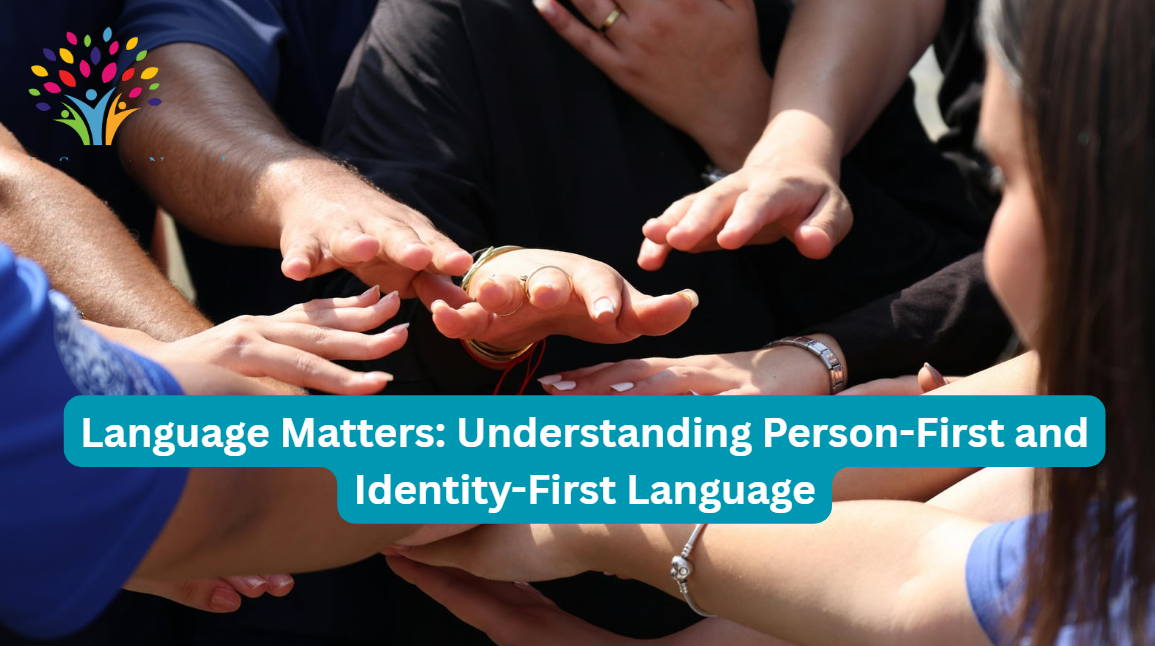
    Photo of people placing hands together, showing their mutual understanding of what was just discussed among them.  This reflects the topic of this blog post which addresses language matters, for better understanding of person-first and identity-first language.

    When discussing disability, many people want to know the “right” thing to say. They want to be respectful, inclusive, and mindful of the language they use. While that intention is important, the answer is not always as straightforward as people might think.

    One of the most valuable lessons in disability advocacy is understanding that there is no single term or phrase that every person prefers. Instead, respectful communication begins with listening.

    Two Common Approaches To Language

    Within the disability community, two common approaches to language are person-first language and identity-first language.

    Person-first language places the individual before the disability. Examples include phrases such as “person with a disability” or “child with Down syndrome.” This approach was developed to emphasize that a person’s disability does not define who they are.

    Identity-first language, on the other hand, places the disability before the person, such as “disabled person” or “Autistic person.” Many individuals prefer this language because they view disability as an important part of their identity rather than something separate from themselves.

    Both approaches are valid, and both are used throughout the disability community.

    The challenge arises when society assumes there is only one correct way to describe every person with a disability.

    Choosing The Correct Approach

    In reality, preferences vary. Some individuals strongly prefer person-first language. Others strongly prefer identity-first language. Many advocacy organizations, self-advocates, family members, and disability communities have differing perspectives based on their experiences and values.

    This is why listening is so important.

    Rather than focusing on memorizing perfect terminology, it can be more helpful to focus on respecting how individuals choose to identify themselves. When someone tells us how they prefer to be described, we have an opportunity to honor their voice and their lived experience.

    Language plays a powerful role in shaping attitudes and perceptions. The words we use influence how society views disability and how individuals with disabilities experience inclusion within their communities. Thoughtful language can help create environments where people feel respected, valued, and understood.

    At the same time, language alone is not enough. True inclusion goes beyond the words we choose. It is reflected in our actions, our policies, our communities, and our willingness to ensure people with disabilities have meaningful opportunities to participate, contribute, and belong.

    Helpful Advice

    If you are unsure which language someone prefers, it is okay to ask respectfully. Most people appreciate genuine curiosity and a willingness to learn.

    A good rule of thumb is simple:

    Listen. Learn. Respect.

    By approaching conversations about disability with openness and humility, we can help build more inclusive communities where every individual feels seen, heard, and valued.

    At Community Supports Network, we believe inclusion begins with respect. By listening to individuals with disabilities and honoring their preferences, we can continue creating communities where everyone has the opportunity to thrive.
  • Words Matter: How Language Shapes Disability Inclusion

    Graphic art illustrating a person speaking words, next to bubbles representing words spoken by others in the same conversation, wherein the language used impacts disability inclusion.

    At Community Supports Network (CSN), we believe that inclusion begins with something simple but powerful — our words. The language we use to talk about disability shapes how people are perceived, included, and valued in our communities. When we speak with respect and awareness, we help build a world where everyone belongs.

    Why Language Matters

    Language does more than describe — it defines how we think. The words we choose can either reinforce stereotypes or create understanding. Over time, society’s approach to disability language has evolved — moving away from labels that isolate toward language that empowers.

    For example, phrases like “the disabled” have shifted to “people with disabilities” to emphasize the person, not the condition. This approach, known as person-first language, reflects the idea that disability is one part of who someone is — not their entire identity.

    Person-First vs. Identity-First Language

    In recent years, there’s been an important and ongoing conversation about how people prefer to be identified.

    • Person-first language (like “a person with autism” or “a person who uses a wheelchair”) focuses on individuality before disability.
    • Identity-first language (like “an autistic person” or “a Deaf person”) centers pride in disability identity and culture.

    Neither is “right” or “wrong” — the most respectful approach is to listen and use the language someone chooses for themselves.

    Common Phrases to Rethink

    We all use language out of habit, and sometimes without realizing the impact it can have. Here are a few easy shifts to make:

    Instead of…Try Saying…
    “Suffers from” or “victim of”“Lives with” or “has”
    “Wheelchair-bound”“Uses a wheelchair”
    “Normal” or “healthy”“Non-disabled”
    “Special needs”“Support needs” or “disabled” (if preferred)

    Small changes make a big difference. Inclusive language helps everyone feel seen, respected, and part of the conversation.

    How We Practice Inclusion at CSN

    At CSN, we’re committed to modeling inclusive communication in everything we do — from the way we speak with individuals and families to the language we use in our programs, newsletters, and community outreach. We know that words are one of the first ways people experience our values.

    Our mission is not only to provide exceptional support services but also to promote a culture of respect and belonging — across New Jersey and beyond.

    The Takeaway

    Language evolves, and so should we. By being mindful, open, and willing to learn, we can all help shape a more inclusive world — one word at a time.

    Want to learn more about how CSN promotes inclusion and empowerment across New Jersey? Visit our website or follow us on social media for more stories and resources.

Serving Morris, Passaic, Bergen, Essex, Hudson, Union, Warren, Somerset, Hunterdon & Sussex Counties