

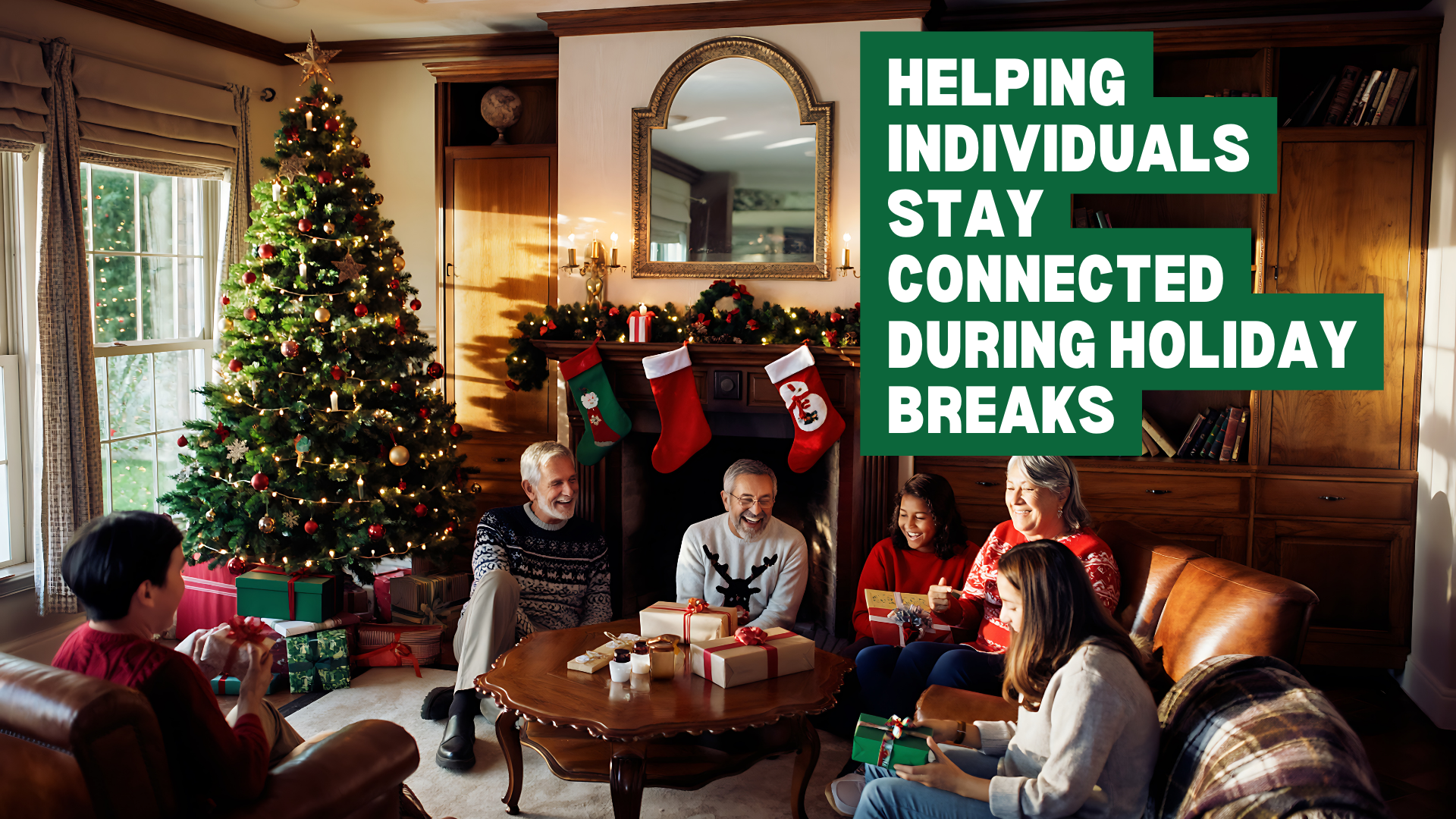
The holiday season is often filled with celebration, routine changes, and time away from familiar day programs or community activities. While these breaks can bring joy and rest, they can also create periods of isolation or disconnection for individuals with disabilities, especially when regular schedules pause or support systems shift. This post helps readers find easy ways to stay connected during holidays when that happens.
At Community Supports Network, we believe that meaningful connection is essential to emotional wellness. Staying socially engaged helps individuals feel grounded, included, and supported, even when routines look different. With a little planning and creativity, families, DSPs, and caregivers can help make holiday breaks a time of comfort, community, and positive experiences.
Below are simple, person-centered ideas to help individuals stay connected throughout the holiday season.
How To Stay Connected During Holidays
1. Keep Familiar Communication Routines Going
Even when schedules change, familiar communication patterns can provide stability.
Encourage short check-ins with friends, family, or trusted staff through video calls, voice messages, or text prompts adapted to each person’s communication style. Consistency helps individuals maintain important relationships and feel connected to their support network.
2. Create a “Holiday Connection Plan”
Before a break begins, work with the individual to decide who they want to stay in touch with and how often.
This might include weekly Zoom calls with a friend, a shared photo journal with family, or scheduled check-ins with staff. Planning ahead reduces anxiety and gives individuals something positive to look forward to.
3. Use Visual Schedules or Social Stories to Navigate Changes
Visual supports can help individuals understand what to expect during holiday breaks.
A simple schedule with family gatherings, rest days, or outings can make changes feel more predictable. Social stories can explain holiday events, new environments, or visiting relatives in a calm, clear way that supports emotional regulation.
4. Create Shared Holiday Activities
Connection doesn’t always require being in the same place.
DSPs and caregivers can help individuals participate in shared activities across distances—baking the same recipe on a video call, doing a craft “together,” listening to a favorite playlist, or exchanging photos of completed projects. These shared experiences help maintain a sense of togetherness.
5. Encourage Participation in Community Traditions
Local events—such as light displays, winter markets, accessible concerts, or library programs—offer opportunities for safe, meaningful social engagement.
Attending familiar annual traditions or exploring new ones can bring joy, build skills, and strengthen community belonging.
6. Support Emotional Wellness Along the Way
Holiday breaks often bring sensory changes, loud environments, and breaks in routine.
Check in regularly about how the individual is feeling. Offer calm spaces, sensory supports, or quiet alternatives when needed. Feeling emotionally supported helps individuals remain open to social interactions and new experiences.
Looking Ahead
Staying connected during holiday breaks is about more than filling time—it’s about fostering belonging, maintaining relationships, and creating positive, predictable moments. With thoughtful planning and person-centered support, individuals can experience the holiday season as a time of warmth, connection, and meaningful engagement.
Explore More Resources
To learn more about how CSN supports individuals and families throughout the year, visit our website to explore our programs, community services, and person-centered approaches to care.